
Diamond Cut CNC Lathe Repair Explained: Process, Limits & Cost
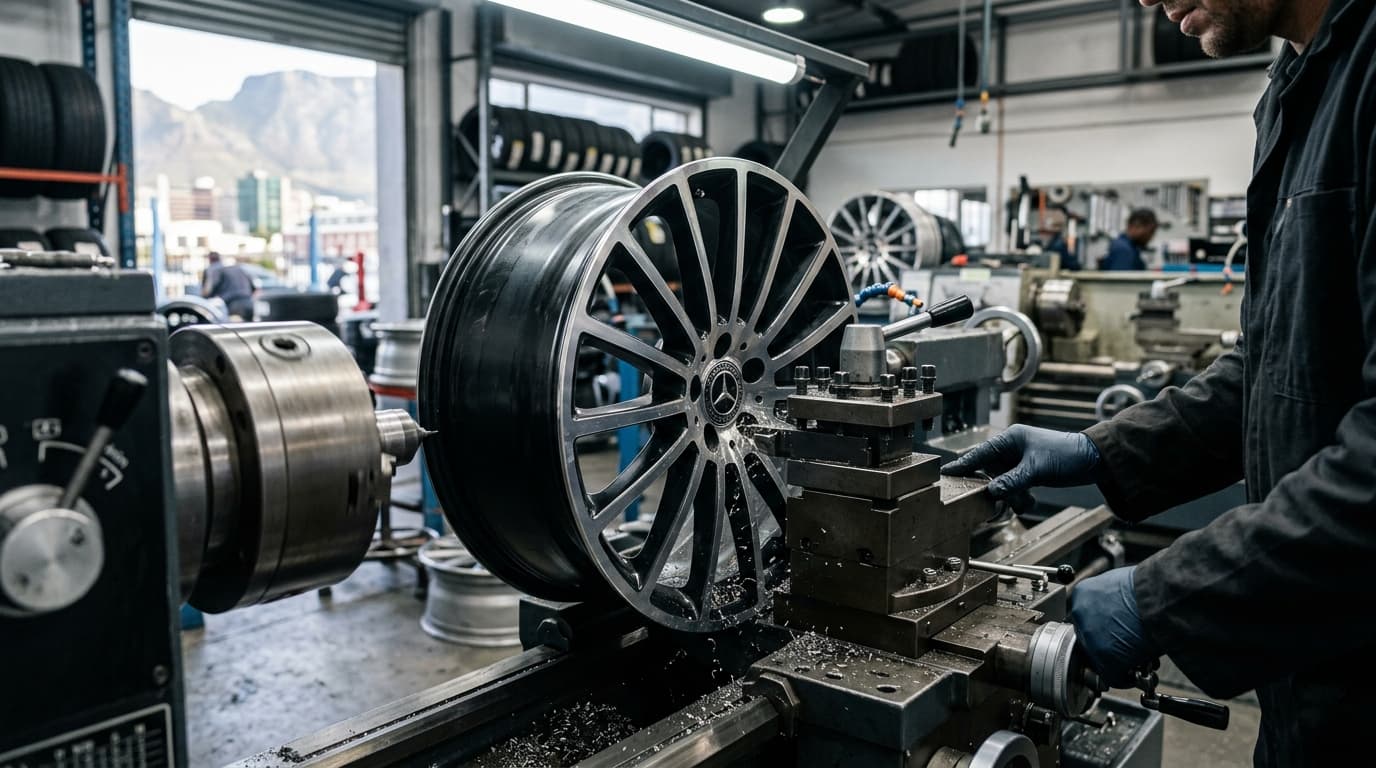
Diamond cut cnc repair is the specialist process used to restore alloy wheels with a bright machined face and painted inner pockets. For many Cape Town drivers, especially on VW Polo, BMW 3 Series, Mercedes-Benz, Audi and Toyota models, this finish is part of the original factory look. It is also one of the finishes where the repair method matters most, because the wheel face is not simply painted over. A thin layer of aluminium is removed on a computer-controlled lathe to recreate the crisp metallic surface.
At Speedline Mags in Parow, Cape Town, diamond-cut assessment starts with the wheel itself. The technician needs to check damage depth, run-out, corrosion, previous repairs and available material before deciding whether another cut is responsible. This guide explains how the CNC lathe process works, where the limits are, and how the cost compares with painting or powder coating.
What Diamond Cut CNC Repair Means
A diamond-cut alloy wheel has two visible finish types on the same face. The inner windows, spokes or pockets are normally painted, while the front face is machined with a very fine cutting tool. This leaves a reflective, precision-lined surface that catches light differently from normal silver paint. It is common on modern OEM wheels because it gives a premium look without the full polish maintenance burden.
In a diamond cut cnc repair, the wheel is not sanded by hand until shiny. A CNC lathe maps and cuts the face in a controlled pass, removing only enough aluminium to clean up kerb marks, scratches or corrosion staining. The aim is to restore the original face profile while keeping the wheel within safe material limits.
That distinction matters. Paint can hide many surface marks. A CNC cut physically changes the face. Done correctly, the change is tiny and controlled. Done too many times, or done on a wheel that is already thin from earlier machining, it can remove more material than the wheel should lose.
If you are comparing finishes, it helps to read Diamond Cut Wheels vs Powder Coating and Diamond Cut Wheel Repair: Restore Factory Finish. Those articles cover the finish choice; this guide focuses on the repair process and its limits.
The Step-by-Step CNC Lathe Repair Process
1. Initial inspection and safety check
The process starts before the wheel goes near a lathe. A proper shop inspects the rim for cracks, bends, welds, buckles, corrosion and previous cutting. In Cape Town, pothole impacts and kerb strikes are common, so the inspection should include both cosmetic and structural checks. A wheel with a sharp buckle or a crack near a spoke may need straightening, welding assessment or replacement advice before any cosmetic work is considered.
The technician also checks whether the wheel is truly diamond cut or just painted in a bright silver finish. Some aftermarket wheels look machined from a distance but are actually painted or polished differently. Matching the repair method to the original finish avoids an uneven result.
2. Tyre removal and wheel preparation
For a high-quality repair, the tyre is usually removed. This allows full access to the face and lip, prevents heat or chemical damage to the tyre, and makes it easier to clean the bead area. Valves, weights and any trim pieces are removed as needed.
The wheel is then stripped or cleaned depending on the state of the finish. Brake dust, tar, corrosion and old lacquer need to be removed so the paint and machined sections can be rebuilt cleanly. If the painted pockets are damaged, they may need refinishing before the face is cut.
3. Paint or base finish restoration
Most diamond-cut wheels are two-stage repairs. The inner painted areas are refinished first, then the face is machined. If the base paint is poor, the final machined face can look fresh while the windows still look tired. A proper repair treats the full visual face of the wheel, not only the shiny edge.
Colour matching is important here. Factory anthracite, gloss black, satin grey and silver pockets each change the way the machined face appears. A clean paint stage gives the CNC cut its contrast.
4. CNC mapping and setup
The wheel is mounted on the lathe and centred carefully. The operator sets the cutting path according to the wheel shape. Modern diamond-cut faces are not always flat. Many have curved spokes, stepped edges, recessed areas or lips that need a careful path so the cutter removes material only where it should.
This is where experience matters. The machine gives precision, but the setup determines whether the cut follows the wheel correctly. Too shallow and damage remains. Too deep and unnecessary aluminium is removed.
5. The diamond cutting pass
The cutting tool makes a controlled pass across the wheel face, shaving away a thin layer of aluminium. The goal is to remove kerb scuffs, oxidation and shallow marks while recreating the fine radial machining lines.
For light kerb rash, a minimal cut may be enough. For deeper gouges, the operator has to decide whether the damage can be safely removed or whether a small mark should remain rather than overcut the face. A responsible repair protects the wheel first and the appearance second.
6. Lacquer protection and curing
Freshly machined aluminium needs protection. A clear coat is applied over the face to slow corrosion and protect the finish from water, brake dust and road grime. This step is vital in coastal areas because moisture and salty air can attack exposed aluminium quickly.
The wheel is then cured, inspected, balanced and refitted. A final check should look for clear coat coverage, edge quality, colour match, run-out and any remaining marks that were deliberately left because cutting deeper would be risky.
Diamond Cut CNC Repair Limits
The biggest misunderstanding about diamond-cut wheels is that they can be repaired indefinitely. They cannot. Every lathe cut removes material from the face. Even when the cut is very light, the cumulative effect matters.
How much material can be removed
There is no universal safe number in millimetres that applies to every wheel. Wheel designs differ in spoke shape, face thickness, load rating and previous repair history. Some wheels have enough face material for more than one light cut. Others have already been machined once or twice and should not be cut again.
A technician looks for practical signs: softened spoke edges, reduced definition around logos or bolt recesses, a lip that no longer has its original shape, previous lathe marks, deep kerb gouges and corrosion under the lacquer. If too much material would need to be removed to make the wheel look perfect, another route is safer.
How many times can diamond cut be repaired
As a rule of thumb, many diamond-cut wheels can tolerate one or two careful refurbishments if the damage is light and the wheel has not already been overcut. Some can take a third cosmetic cut, but that should never be assumed. The decision depends on actual wheel condition, not a fixed number.
This is why a good workshop will not promise a perfect diamond-cut finish over WhatsApp from one photo. Photos help with quoting, but the final call often needs an in-person inspection. At Speedline Mags, that inspection is part of avoiding an attractive but poor repair.
When diamond cut is no longer viable
Diamond cut may not be the right option when the wheel has deep kerb damage, heavy corrosion under the lacquer, cracks, multiple previous cuts, missing material on the lip, or a face profile that would need aggressive machining. It can also be poor value on wheels used in harsh conditions, such as daily gravel routes, repeated pothole exposure or fleet use where durability matters more than the factory machined look.
When diamond cut is no longer viable, painting or powder coating the whole face can be the better answer. The wheel loses the machined contrast, but it can gain a more durable and easier-to-maintain finish. For a broader repair-versus-replacement decision, see Why Wheel Repair Is Better Than Replacement.
Diamond Cut Repair Cost in Cape Town
Pricing depends on wheel size, condition, finish complexity and whether structural work is needed first. In Cape Town, diamond cut cnc repair usually costs more than a basic painted cosmetic repair because it involves more preparation, machine time and clear coat finishing.
As a practical guide, light cosmetic diamond-cut refurbishment can often start from around ZAR 1,200 to ZAR 2,500 per wheel, while larger wheels, severe kerb damage, corrosion, bends or complex finishes can push the job higher. If the wheel also needs straightening, welding assessment, tyre work or full colour change, those items are normally quoted separately.
Painting over a tired diamond-cut face can sometimes be cheaper than restoring the machined finish, especially if all four wheels are being changed to gloss black, satin grey or another solid colour. Powder coating may also offer better long-term durability for drivers who prioritise easy cleaning and resistance to chips. You can compare durability in Powder Coating Wheels: Complete Guide and Wheel Repair Cost South Africa Price Guide.
The cheapest quote is not always the best value. A low price can mean the wheel is cut too aggressively, lacquer is rushed, or the painted sections are not refinished properly. With diamond-cut wheels, the skill is knowing when not to chase absolute perfection at the expense of safe material thickness.
Signs Your Diamond-Cut Wheels Need Professional Attention
Small kerb marks are the obvious trigger, but they are not the only reason to book an assessment. White milky staining under the clear coat, bubbling around the machined edge, sharp chips on the lip, vibration after a pothole hit, or a slow leak near the bead can all point to issues that need more than surface polish.
Cape Town drivers often notice this after winter rain exposes potholes, or after a long N1 or N2 commute where a small vibration becomes more obvious at speed. If the wheel is also bent, cosmetic repair alone will not solve the problem. Read Wheel Straightening: Bent Rim Repair Guide if vibration or visible wobble is part of the issue.
The earlier the wheel is assessed, the better the chance of a light cut or simpler repair. Leaving damaged lacquer open can allow corrosion to spread under the clear coat, which makes later repair more expensive and less predictable.
How to Look After a Fresh Diamond-Cut Repair
After repair, avoid harsh acidic wheel cleaners and aggressive brushes. Use a pH-balanced wheel cleaner, soft brushes and regular rinsing. Brake dust left on the clear coat for weeks at a time can stain the finish, especially when the wheel is hot.
Try to avoid automatic car washes that use harsh chemicals or stiff wheel brushes. They can mark the lacquer and speed up dulling. Hand washing is slower, but it protects the machined face better.
If you spot a new chip or scrape, do not use metal polish on a lacquered diamond-cut wheel. It can damage the clear coat and create patchy shine. Get advice first. Basic cleaning guidance is covered in Ultimate Wheel Care Guide.
Should You Keep Diamond Cut or Change Finish
Keeping diamond cut makes sense when the wheel is structurally sound, the damage is light to moderate, and the factory look matters to the car. It is especially worthwhile on premium OEM wheels where the machined finish is part of the design.
Changing to a painted or powder coated finish makes sense when the wheel has limited remaining material, corrosion keeps returning, the vehicle is used hard, or you want a lower-maintenance colour. Many Northern Suburbs drivers choose satin grey, gloss black or silver because those finishes can be easier to repair later and better suited to daily parking and pothole exposure.
There is no one best answer. The right choice balances safety, appearance, budget and how the car is used. A BMW 3 Series with light kerb marks may deserve a factory-style diamond cut. A Toyota Hilux working daily on rough roads may be better served by a tougher painted or powder coated finish.
Conclusion: Diamond Cut CNC Repair Needs Careful Judgement
Diamond cut cnc repair can restore a wheel to a sharp factory-style finish, but it is not just a cosmetic shortcut. The CNC lathe process removes real aluminium, so the workshop has to understand both the machine and the limits of the wheel. The best repair is the one that cleans up the damage while preserving safe material thickness and long-term durability.
If your diamond-cut wheels have kerb rash, milky lacquer, corrosion or pothole damage, contact Speedline Mags in Parow, Cape Town. The team can inspect the wheels, explain whether CNC diamond-cut repair is still viable, and quote the most sensible option for your car and budget.