
Mag Wheel Repair Services: What's Included and What to Expect
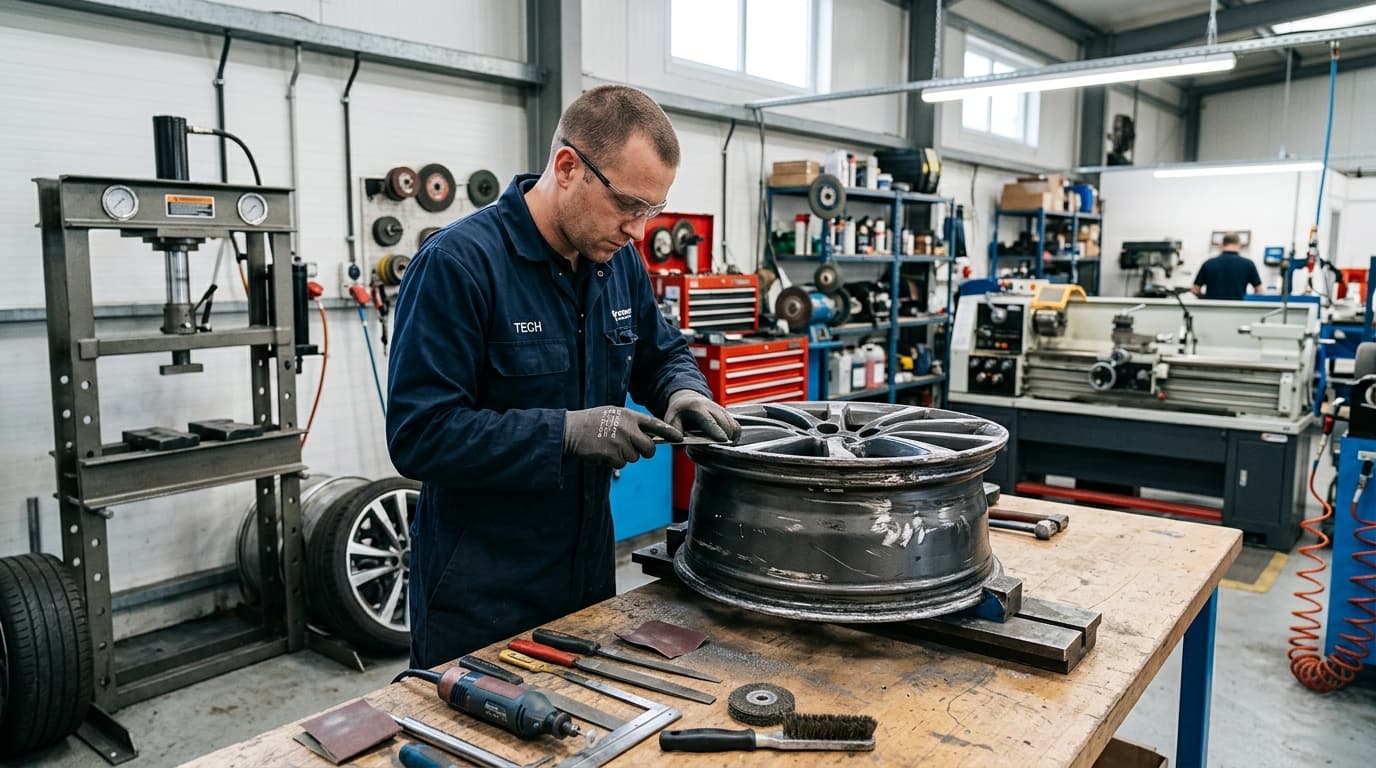
If you've recently scraped a kerb, hit one of Cape Town's legendary potholes, or noticed your wheels looking dull and corroded, you've probably started searching for mag wheel repair services. But what does a repair actually involve? What can be fixed, what can't, and how long will it take?
This guide walks you through the full service offering at a specialist wheel repair workshop — covering everything from the initial assessment to the final finish — so you can arrive informed and leave confident.
What Does a Mag Wheel Repair Service Include?
Mag wheel repair is not a single procedure. It's a menu of services, each addressing a specific type of damage. A good workshop will assess your wheels first and recommend only what's genuinely needed. Here's a breakdown of the core services you'll encounter.
1. Wheel Inspection and Assessment
Every repair starts with a thorough inspection. A technician will check for:
- Structural damage — cracks, fractures, or severe bends that affect safety
- Surface damage — kerb rash, scuffs, pitting, or corrosion
- Rim trueness — whether the wheel runs true or wobbles when spun (indicating a buckle)
- Air retention — especially relevant if you're dealing with a slow leak around the rim
This assessment determines what services are needed and whether the wheel is worth repairing or should be replaced. At Speedline Mags in Parow, we never recommend repairs that won't hold — if a wheel is too far gone, we'll tell you straight.
2. Wheel Straightening (Buckle and Bend Repair)
A buckled or bent rim is one of the most common issues Cape Town drivers face. Our roads — particularly in areas like Bellville, Parow, and along the N1 — are notorious for tyre-swallowing potholes that impact wheels hard enough to knock them out of round.
Wheel straightening uses a hydraulic press and specialist equipment to return a deformed wheel to its original geometry. The process is precise: a technician spins the wheel on a lathe to identify exactly where the high and low points are, then applies controlled pressure to work the metal back into shape.
Not all buckles can be fully corrected. Severe bends — especially those that have caused cracking — may weaken the wheel to the point where straightening is no longer safe. A reputable shop will assess the structural integrity before and after straightening and be honest about the outcome.
What to expect: Minor buckles can often be corrected in under an hour. Turnaround is usually same-day if you drop the wheel off in the morning.
For a detailed breakdown of the straightening process, see our guide on wheel straightening and bent rim repair.
3. Crack Repair and Welding
Cracked alloy wheels are more common than most drivers realise. A sharp pothole impact, a severe buckle, or even a tyre blowout can crack the wheel structure. Cracks range from hairline fractures (often invisible to the naked eye) to visible structural breaks.
Alloy wheel welding is a specialist skill. Aluminium alloy has very different welding properties compared to steel — it requires TIG welding with the correct filler material, and the heat must be carefully controlled to avoid warping or weakening the surrounding metal.
After welding, the repaired area is machined smooth and the wheel is re-inspected to confirm structural integrity. It's then refinished to match the original or new finish.
Important caveat: Not every cracked wheel can or should be repaired. Cracks that run through the spoke or near the centre hub are often beyond safe repair. Safety is the primary consideration — a repaired wheel that fails at 120km/h is far worse than a replacement. Read more about when alloy wheel welding is safe.
4. Kerb Damage Repair
Kerb rash — the scuffing and gouging caused by catching a raised kerb during parking — is probably the most common reason South African drivers bring their wheels in. It's cosmetic damage, but it looks terrible and it can accelerate corrosion if the protective coating is breached.
Kerb damage repair typically involves:
- Sanding back the damaged area to bare metal
- Filling any gouges with high-quality body filler or alloy repair compound
- Sanding smooth and feathering into the surrounding surface
- Priming and refinishing to match the original wheel colour and finish
A good repair should be invisible once the wheel is refinished. The skill lies in matching the finish — whether that's gloss silver, satin black, or a custom colour.
For a step-by-step look at the process, see how to fix curb rash on alloy wheels.
5. Powder Coating
Powder coating is one of the most durable and versatile wheel finishing options available. It involves electrostatically applying a dry powder to the prepared wheel surface, then curing it in an oven at high temperature. The result is a thick, hard, chip-resistant finish that's far more durable than conventional paint.
Powder coating is the go-to choice when:
- You want to change your wheel colour (any RAL colour is possible)
- The existing finish is badly corroded, chipped, or peeling
- You want a long-lasting, low-maintenance finish
- You're refinishing after a structural repair
Before powder coating, wheels are chemically stripped, sandblasted, and inspected. Any damage must be repaired before the finish is applied. This is why a full refurbishment — strip, repair, coat — often takes 2–4 days rather than a few hours.
Common colour choices in Cape Town: Satin black, gloss black, gunmetal grey, silver, and custom colours are all popular. Two-tone finishes (e.g., black spokes with a machined lip) are increasingly requested.
For more on this process, see our complete guide to powder coating wheels in Cape Town.
6. Diamond Cut Refurbishment
Diamond cut wheels — also called machine-faced or lathe-cut wheels — have a distinctive high-polish machined face with a lacquered finish. They're standard on many premium vehicles including BMW, Audi, Mercedes-Benz, and VW. They look stunning when new, but they're also more vulnerable to corrosion and kerb damage than powder-coated wheels.
Refurbishing a diamond cut wheel requires a CNC lathe. The process involves:
- Stripping the existing lacquer
- Correcting any surface damage
- Machining the face of the wheel on the lathe to reveal fresh aluminium
- Applying a corrosion-inhibiting lacquer
The result is a factory-fresh mirror finish. Done correctly, you can't tell a refurbished diamond cut wheel from new.
Turnaround: Diamond cut refurbishment typically takes 2–3 working days per wheel, as the lacquer needs to cure properly. Rushing this stage compromises the finish.
See our detailed guide on diamond cut wheel refurbishment and the comparison of diamond cut vs powder coating.
7. Corrosion Treatment
Corrosion — that white, pitted oxidation that attacks alloy wheels — is a Cape Town reality. Salt air from the ocean (especially in areas near the Blouberg and Table View coastline), brake dust, and acidic road grime all attack alloy surfaces when the protective coating fails.
Treating corrosion properly means going back to bare metal, treating with a chemical conversion coating (like Alodine) to passivate the aluminium, and then applying a fresh protective finish. Surface-level treatments that don't address the underlying oxidation will fail within months.
If you've noticed your wheels starting to pit or bubble beneath the lacquer, act early — deep corrosion is much harder and more expensive to address. See our guide on wheel corrosion causes, prevention, and treatment.
What to Expect: The Repair Process Step by Step
Here's how a typical visit to a specialist wheel repair workshop unfolds.
Step 1: Drop-off and assessment (Day 1)
You bring the vehicle or the bare wheels in. A technician inspects each wheel and provides a written quotation. At Speedline Mags, we assess every wheel individually — the price depends on the type and extent of damage, not a flat rate.
Step 2: Preparation (Day 1–2)
Wheels are dismounted from tyres (if not already), cleaned, and stripped of their existing finish. This exposes the full extent of any damage — sometimes damage hidden under lacquer only becomes visible at this stage. If anything changes the scope of work, you'll be informed before we proceed.
Step 3: Structural repairs (Day 2–3)
Straightening, welding, and filling take place. The wheel is spun on a lathe to verify trueness after straightening. Repaired areas are machined smooth and inspected.
Step 4: Finishing (Day 2–4)
Depending on the chosen finish:
- Powder coating: Primed, powder applied, cured in oven
- Diamond cut: CNC lathe machining, lacquered
- Custom paint/two-tone: Masked, painted in stages, clear-coated
Step 5: Quality check and collection (Day 3–5)
Wheels are inspected under bright light before release. Tyres are refitted and balanced if requested. You collect your wheels — or we can arrange delivery for fleet customers.
Turnaround Times at a Glance
| Service | Typical Turnaround | |---|---| | Wheel straightening only | Same day to next day | | Kerb damage repair + powder coat | 2–3 working days | | Diamond cut refurbishment | 2–4 working days | | Crack repair + refinish | 3–5 working days | | Full set of 4 wheels | Add 1–2 days |
Note: These are typical times. Complex repairs, custom colours, or a heavy workload may extend turnaround. We always give an accurate estimate at the time of assessment rather than overpromising.
What Can't Be Repaired?
Knowing the limits of wheel repair is as important as knowing what's possible. The following typically can't be safely repaired:
- Cracks through the hub bore or central mounting area — structurally critical and not safely weldable
- Multiple cracks radiating from a single point — indicates metal fatigue across the wheel structure
- Severe corrosion that has eaten through the wheel — no surface finish will hold on severely pitted aluminium
- Wheels that have been repaired multiple times in the same location — repeated heating from welding weakens the surrounding alloy
In these cases, replacement is the responsible recommendation. Read our guide on cracked alloy wheel: repair or replace? for more detail.
Costs: What to Budget For in Cape Town
Pricing depends heavily on wheel size, damage severity, and the finish required. As a rough guide in 2026:
- Straightening (per wheel): R350–R700
- Kerb damage repair + powder coat (per wheel): R750–R1,400
- Diamond cut refurbishment (per wheel): R900–R1,600
- Crack repair (per wheel): R600–R1,200 depending on severity
- Full refurbishment (strip, repair, coat, 4 wheels): R3,500–R6,000+
For more detail on pricing, see our wheel repair cost guide for South Africa. If you have insurance that covers tyre and rim damage, we can provide documentation for a claim — see our insurance claims guide.
Why Choose a Specialist Over a Tyre Shop?
Many general tyre shops offer basic wheel repairs as a side service. The difference is in equipment, training, and focus. A specialist workshop uses CNC lathes, hydraulic straightening presses, powder coating ovens, and TIG welding equipment. The staff are dedicated to wheel repair — not tyre fitting, alignment, or balancing as primary services.
The result is a higher-quality finish, more reliable structural repair, and a team that can accurately diagnose problems that a generalist might miss. For premium vehicles — BMW, Mercedes-Benz, Porsche, Audi — where wheels are expensive to replace and the finish is highly visible, this distinction matters significantly.
Ready to Bring Your Wheels In?
Speedline Mags is based in Parow, Cape Town, serving the Northern Suburbs and beyond — including Bellville, Durbanville, Tygervalley, and surrounding areas. We offer free assessments and transparent, itemised quotations.
Whether you've got a single kerbed wheel or a full set needing refurbishment, contact us to discuss your options. We'll tell you what can be repaired, what it will cost, and how long it will take — no pressure, no vague estimates.
Contact Speedline Mags today to book your wheel assessment or get a quote.