
Mercedes-Benz Wheel Refurbishment Guide
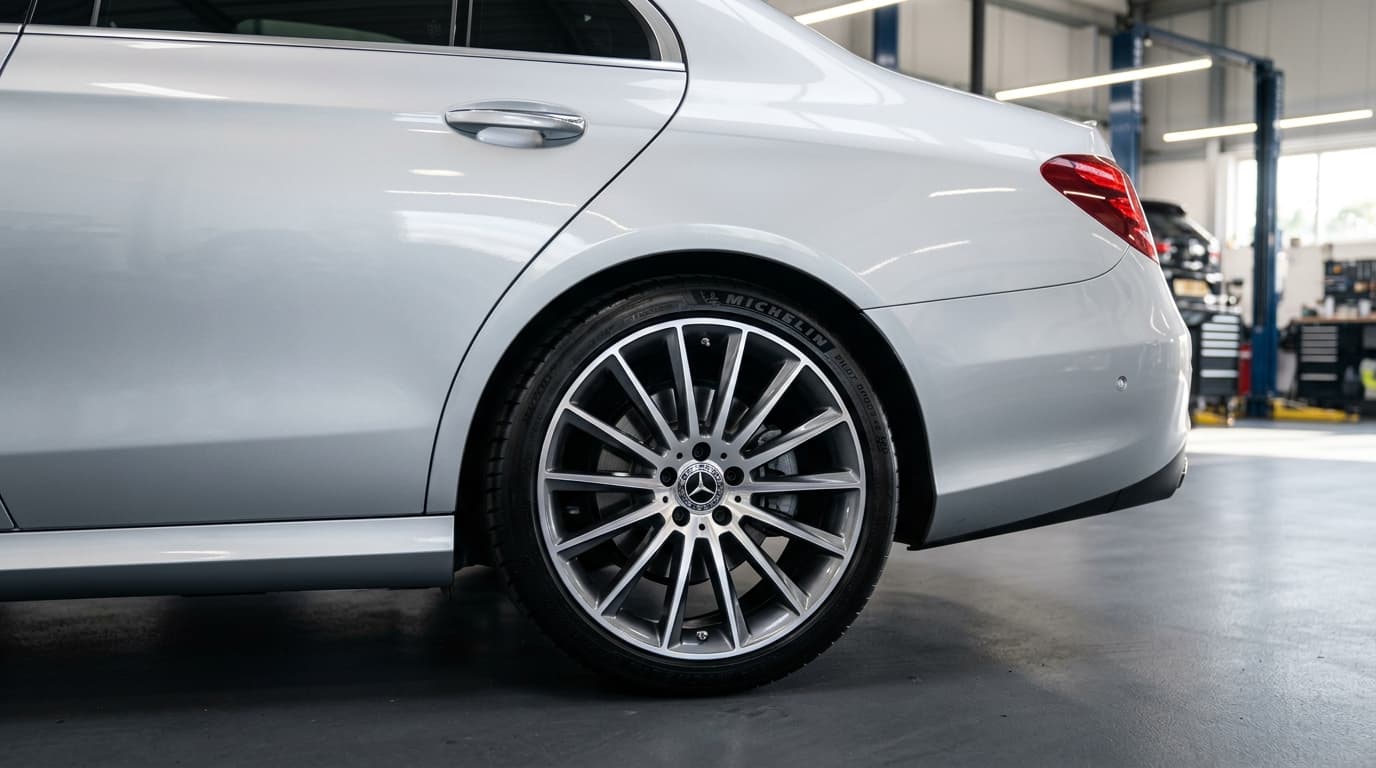
Mercedes-Benz vehicles are known for their elegant design, and their wheels play a massive part in that premium look. Whether you drive a C-Class through the Northern Suburbs or an E-Class along the Atlantic Seaboard, damaged or tired-looking wheels can seriously undermine the appearance of your car. Mercedes-Benz wheel refurbishment is the process of restoring your alloy wheels to a factory-fresh finish — and in many cases, it's far more affordable than buying replacements.
In this guide, we cover everything you need to know about refurbishing your Mercedes wheels in Cape Town, from the types of finishes available to costs, timelines, and what to look out for when choosing a specialist.
Why Mercedes-Benz Wheels Need Special Attention
Mercedes wheels aren't just any alloy wheels. They're engineered to precise specifications and often feature complex finishes that require specialist knowledge to repair properly. Here's why they deserve extra care.
Premium Finishes Require Premium Repair
Most modern Mercedes-Benz models come standard with diamond-cut or machined-face alloy wheels. The C-Class, E-Class, GLC, and AMG models all feature multi-spoke designs with intricate detailing that standard repair shops may struggle to replicate. A botched repair job on a Mercedes wheel is immediately noticeable — the spoke edges won't be crisp, the finish will look dull, and the overall appearance will let down an otherwise beautiful car.
Diamond-cut wheels have a precision-machined face with a lacquer coating on top. When this lacquer gets damaged — from kerb strikes, stone chips, or general wear — moisture gets underneath and causes corrosion. If left untreated, what starts as a small scuff can turn into unsightly white spots and peeling lacquer across the entire wheel face. For more on how this happens, read our guide on wheel corrosion causes and prevention.
Common Damage on Mercedes Wheels
The most frequent issues we see on Mercedes wheels at our Parow workshop include:
- Kerb rash and scuffing — by far the most common, especially on the popular 17" and 18" wheels fitted to C-Class and E-Class models. Those low-profile tyres offer very little protection when parking.
- Diamond-cut lacquer peeling — the clear coat lifts away from the machined face, allowing oxidation underneath. This is particularly common on wheels over 3-4 years old.
- Cracking — less common but serious, usually caused by pothole impacts. South African roads are notoriously harsh, and a hard hit on the N1 or one of Cape Town's many potholed side streets can crack even a strong Mercedes alloy.
- Corrosion and oxidation — Cape Town's coastal salt air accelerates corrosion on any exposed aluminium. Wheels near the coast in areas like Table View, Blouberg, and the Atlantic Seaboard are especially vulnerable.
- Brake dust etching — Mercedes models with high-performance brake pads (especially AMG variants) produce aggressive brake dust that, if not cleaned regularly, can permanently stain the wheel surface.
Types of Mercedes Wheel Refurbishment
Not all refurbishment is the same. The right approach depends on your wheel's original finish and the type of damage.
Diamond Cut Refurbishment
This is the most common refurbishment method for modern Mercedes wheels. The process involves stripping the old lacquer, mounting the wheel on a CNC lathe, and precision-machining the face to remove all damage. A fresh coat of lacquer is then applied to protect the newly machined surface.
The result is a wheel that looks factory-new, with the characteristic bright, reflective finish that Mercedes owners love. Diamond cutting is ideal for wheels with kerb damage, lacquer peel, or surface corrosion on the machined face.
It's worth noting that wheels can only be diamond cut a limited number of times — typically 2-3 times over their lifetime — because each pass removes a thin layer of metal. A reputable specialist will measure the wheel face thickness before proceeding and advise you if the wheel has already been cut too many times. Learn more about this process in our diamond cut wheel repair guide.
Powder Coating
For Mercedes owners wanting a full colour change or a more durable finish, powder coating is an excellent option. The wheels are stripped back to bare metal, any damage is filled and smoothed, and then a powder coat is electrostatically applied and baked in an oven at around 200°C.
Powder coating is tougher than regular paint and highly resistant to chipping, scratching, and chemical damage. Popular choices for Mercedes wheels include:
- Gloss black — a favourite for AMG models and anyone going for a sportier look
- Satin black — more understated and hides brake dust better than gloss
- Hyper silver — closely matches the factory Mercedes silver finish
- Gunmetal grey — a popular upgrade that adds a modern, aggressive edge
If you're torn between diamond cutting and powder coating, our comparison guide breaks down the pros and cons of each.
Combination Finish
Many Mercedes wheels — particularly AMG and higher-spec models — feature a combination finish: a diamond-cut face with powder-coated inner spokes and barrel. This two-tone look is part of what makes Mercedes wheels so distinctive, and it requires a specialist who can handle both processes on a single wheel.
The refurbishment process for combination-finish wheels is more involved: the entire wheel is first powder coated in the base colour, then the face is carefully masked and diamond cut, and finally the whole wheel receives a protective lacquer coat.
What Does Mercedes Wheel Refurbishment Cost in Cape Town?
Cost varies depending on the wheel size, the type of finish, and the extent of the damage. Here are typical price ranges you can expect in Cape Town:
Per Wheel Pricing Guide
- Diamond cut refurbishment (standard): R850 – R1,500 per wheel
- Diamond cut refurbishment (AMG/large diameter): R1,200 – R2,000 per wheel
- Full powder coating: R800 – R1,200 per wheel
- Combination finish (diamond cut + powder coat): R1,200 – R2,200 per wheel
- Crack repair (welding + refinish): R600 – R1,500 per wheel depending on severity
- Kerb rash spot repair: R400 – R800 per wheel
Most Mercedes owners opt to refurbish all four wheels at once for a consistent finish, which typically qualifies for a package discount. A full set of diamond-cut refurbished wheels for a C-Class usually comes in between R3,500 and R5,500 — a fraction of the R20,000+ you'd spend on a single new OEM Mercedes wheel.
For a broader look at pricing, check our wheel repair cost guide for South Africa.
What Affects the Price?
Several factors influence the final cost:
- Wheel diameter — 19" and 20" wheels cost more than 17" and 18" due to the larger surface area and more material required
- Number of spokes — complex multi-spoke AMG designs take longer to prep and finish than simpler 5-spoke wheels
- Extent of damage — a light kerb scuff costs less to repair than deep gouges, cracks, or widespread corrosion
- Finish type — combination finishes cost more due to the multiple process stages involved
- Tyre removal — most shops include tyre removal and refitting in the price, but check to be sure
How Long Does Mercedes Wheel Refurbishment Take?
A standard diamond-cut refurbishment takes 2-3 working days per set of four wheels. This includes:
- Tyre removal and inspection
- Chemical stripping of old finish
- Damage repair (filling, smoothing)
- CNC diamond cutting
- Lacquer application and oven curing
- Quality inspection
- Tyre refitting and balancing
Powder coating may take slightly longer — around 3-5 working days — due to the curing process. Combination finishes sit at the longer end of this range since they involve both processes sequentially.
If you need your car back sooner, ask about express service options. Some specialists, including our team at Speedline Mags in Parow, can accommodate faster turnarounds for single-wheel repairs or urgent jobs.
Popular Mercedes Models We Refurbish
At Speedline Mags, we regularly work on wheels from across the Mercedes-Benz range. Here are the models we see most often:
C-Class (W205 / W206)
The bread and butter of Mercedes ownership in South Africa. The C-Class typically comes with 17" or 18" multi-spoke wheels, and the C43/C63 AMG variants feature wider, more aggressive wheel designs. Kerb rash is the most common issue, followed by lacquer peeling on diamond-cut models that are a few years old.
E-Class (W213 / W214)
Larger 18" and 19" wheels are standard on most E-Class models. These bigger wheels are more susceptible to pothole damage, and the multi-spoke designs show kerb damage prominently. The E53 and E63 AMG models have particularly striking wheels that demand quality refurbishment.
GLC and GLE SUV
Mercedes SUVs are incredibly popular in South Africa, and their owners often drive them in conditions that are tough on wheels — gravel roads, construction sites, and the daily pothole gauntlet. The GLC's 19" and 20" wheels are expensive to replace, making refurbishment the smart financial choice.
A-Class and CLA
Entry-level Mercedes models with 17" and 18" wheels. These tend to be driven by younger owners who may be more inclined toward custom finishes — gloss black or gunmetal powder coating over the standard silver.
AMG Models
AMG wheels are the crown jewels. They feature forged or flow-formed construction, intricate multi-spoke designs, and premium finishes. Refurbishing AMG wheels requires precision and experience — a poor repair job on an AMG wheel is immediately obvious. Always choose a specialist with specific AMG experience.
How to Choose a Mercedes Wheel Repair Specialist
Not all wheel repair shops are created equal, and when it comes to premium marques like Mercedes-Benz, quality matters even more. Here's what to look for:
CNC Lathe Capability
Any shop claiming to do diamond-cut refurbishment must have a proper CNC lathe. This is a significant piece of equipment — hand-finishing simply cannot replicate the precision of a machine-cut surface. Ask to see the lathe and examples of their work before committing.
Mercedes Experience
Ask specifically about their experience with Mercedes wheels. Different manufacturers use different alloy compositions and finish specifications. A shop that primarily works on steel wheels or budget alloys may not understand the nuances of working with Mercedes alloys.
Before-and-After Gallery
A confident, quality-focused shop will have plenty of before-and-after photos of their work. Look for examples of Mercedes wheels specifically, and pay attention to the consistency of the finish, the crispness of the spoke edges, and the quality of the lacquer.
Warranty
Reputable refurbishment specialists offer a warranty on their work — typically 12 months for diamond-cut finishes and longer for powder coating. If a shop won't guarantee their work, that's a red flag.
For a more detailed guide on selecting the right specialist, see our article on how to choose a wheel repair specialist in Cape Town.
Caring for Your Refurbished Mercedes Wheels
Once your wheels look factory-fresh again, you'll want to keep them that way. Here are some practical tips:
Regular Cleaning
Clean your wheels every two weeks at minimum — weekly if you drive an AMG model with aggressive brake pads. Use a pH-neutral wheel cleaner (never acidic cleaners on diamond-cut surfaces) and a soft brush. Rinse thoroughly and dry with a microfibre cloth. Our wheel cleaning guide covers the full process.
Wheel Sealant
Apply a quality wheel sealant or ceramic coating after refurbishment. This creates a protective barrier against brake dust, road grime, and moisture. It also makes routine cleaning much easier — contaminants won't bond as strongly to the sealed surface.
Tyre Pressure
Correct tyre pressure protects your wheels from pothole damage. Under-inflated tyres provide less cushioning between the wheel and the road surface, increasing the risk of cracks and buckles on impact. Check pressures monthly and before any long trips.
Parking Awareness
The single best thing you can do to protect your refurbished wheels is to be more careful when parking. Give kerbs a wide berth, and if your Mercedes has parking sensors or a 360-degree camera, use them. A moment of inattention can undo thousands of rands worth of refurbishment work.
When to Repair vs When to Replace
In most cases, refurbishment is the better option — it's significantly cheaper than buying new OEM Mercedes wheels and delivers comparable results. However, there are situations where replacement is the safer choice:
- Structural cracks near the hub or spoke root — these areas bear the most stress, and a repaired crack may not hold
- Wheels that have been diamond cut multiple times — if the face is too thin, further machining compromises structural integrity
- Severe buckling — while minor bends can be straightened, a significantly buckled wheel may not return to true round
- Wheels with manufacturing defects — rare, but some Mercedes wheels have been subject to recalls
For a deeper dive into this decision, read our wheel repair vs replacement guide.
Get Your Mercedes Wheels Refurbished at Speedline Mags
At Speedline Mags in Parow, Cape Town, we specialise in premium alloy wheel refurbishment — and Mercedes-Benz wheels are one of our core strengths. Our workshop is equipped with CNC diamond-cutting lathes, professional powder coating facilities, and a team with years of experience working on everything from C-Class daily drivers to AMG performance vehicles.
We serve clients across the Cape Town metro — from Bellville and Durbanville to Table View, Somerset West, and beyond. Whether you need a single kerb-rashed wheel fixed or a full set brought back to showroom condition, we'll give you an honest assessment and a competitive quote.
Get in touch with Speedline Mags today for a free assessment of your Mercedes-Benz wheels. Call us, WhatsApp us, or drop in to our Parow workshop — we're happy to take a look and let you know exactly what's possible.