
Mobile Diamond Cut Alloy Wheel Repair: Process, Cost & Results
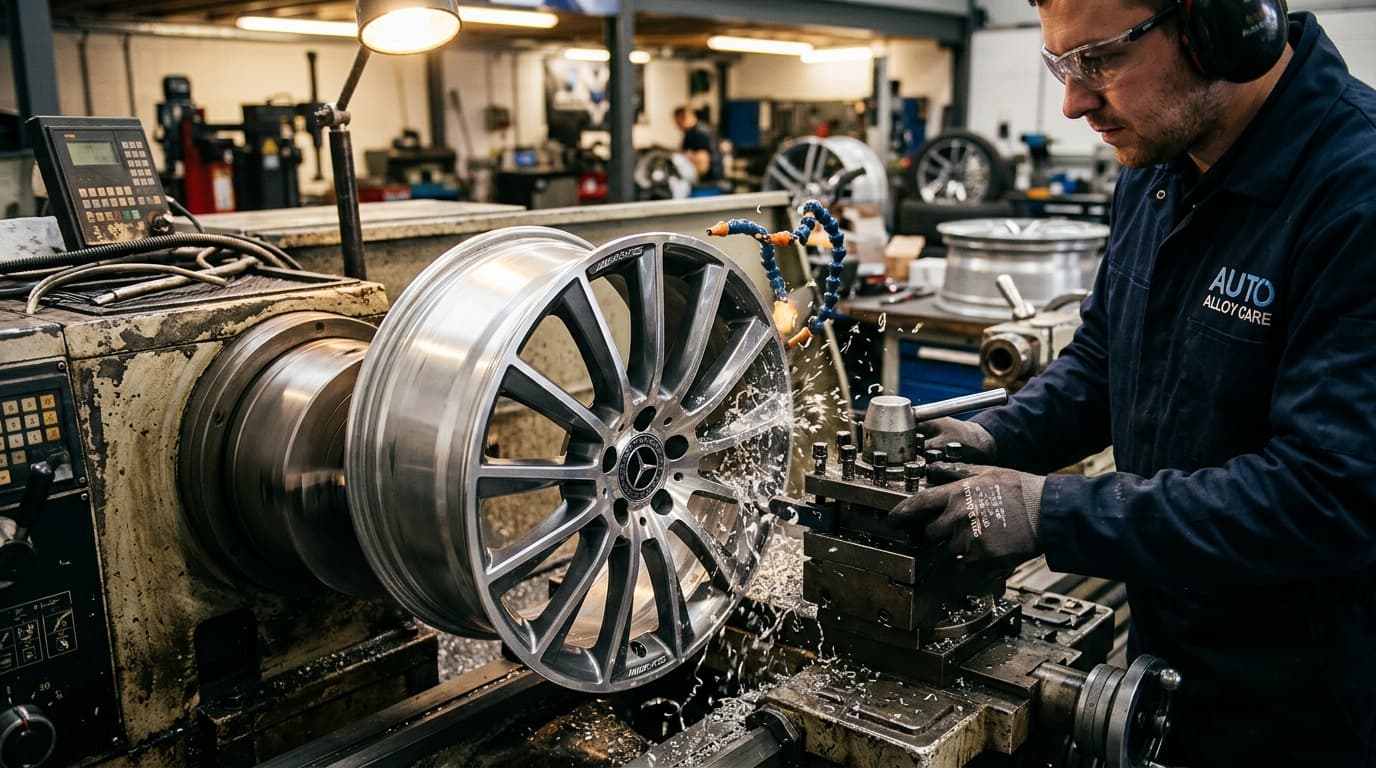
Diamond cut alloy wheels are one of the most distinctive—and most easily damaged—wheel finishes on the road today. That bright, machined face sits right in the firing line of kerb strikes, pothole impacts, and road grime. So when the finish chips, oxidises, or gets scuffed, drivers naturally start Googling "mobile diamond cut alloy wheel repair" hoping someone can come to them.
It sounds ideal: a van pulls up, a technician plugs in some equipment, and your wheels emerge gleaming. But there's a significant gap between the marketing promise and the engineering reality of mobile diamond cut alloy wheel repair. This guide covers exactly what the process involves, what can realistically be done on-site versus in a proper workshop, what you should expect to pay in South Africa, and how to avoid wasting money on inferior results.
What Is Diamond Cut Wheel Refurbishment?
Before evaluating whether mobile delivery makes sense, it helps to understand what diamond cutting actually is.
A diamond cut wheel has a two-stage finish: the structural alloy is first powder coated or painted in a base colour (typically gunmetal, gloss black, or anthracite), and then a CNC lathe removes a precise layer of the face to reveal the bright bare alloy beneath. The result is that characteristic high-contrast, almost mirror-like face with a painted barrel and spokes.
The refurbishment process reverses and repeats this sequence. A technician must:
- Strip the existing finish — the old lacquer, any remaining paint, and corrosion are removed from the wheel face
- True the wheel face — if there are any runout issues or high/low spots, the lathe corrects them
- Machine the face on a CNC lathe — this is the critical step, where a diamond-tipped cutting tool removes a consistent layer in a single pass or series of controlled passes
- Apply a protective clear lacquer — bare machined alloy oxidises rapidly without a lacquer coat; this is typically applied in a spray booth environment
Each of these steps has specific environmental and equipment requirements. That context matters enormously when evaluating whether a mobile service can genuinely replicate workshop results.
For a deeper look at how diamond cut finishing compares to other options, read our guide on diamond cut vs powder coating.
Can Diamond Cut Wheel Repair Truly Be Done Mobile?
This is where honest advice diverges from marketing copy.
The CNC Lathe Problem
A proper CNC wheel lathe — the kind capable of producing a factory-quality diamond cut finish — weighs several hundred kilograms and requires both stable mounting and precise levelling. Some operators do transport smaller, purpose-built portable lathes in vans. These portable units exist and can produce acceptable results on straightforward jobs. However:
- Portable lathes have smaller chucking capacity than workshop machines, limiting the wheel diameters they can handle accurately
- Vibration during cutting (from an unlevel van floor, wind, or a running engine nearby) creates chatter marks in the machined face — visible as faint circular ridges
- Setup and teardown time is significant, often making a single-wheel mobile job take as long as a four-wheel workshop visit
The honest answer: mobile CNC diamond cutting is technically possible but the window for perfect results is narrower than workshop conditions allow. On simple, undamaged wheel faces with light scuffs or oxidisation, a competent mobile operator can achieve very good results. On wheels with deeper damage, corrosion pitting, or significant kerb rash, the risk of visible flaws increases substantially.
The Lacquering Problem
This is where most mobile diamond cut services hit a hard wall. Applying lacquer correctly requires a clean, temperature-controlled, dust-free environment. Spraying lacquer in a driveway — even with a pop-up canopy — introduces dust contamination and risks orange peel texture. Some mobile operators use UV-cure lacquers that reduce this window, but they still require proper surface preparation and application technique.
Poor lacquering is the single biggest cause of premature failure in diamond cut refurbishment. Peeling, bubbling, and early yellowing all trace back to inadequate curing conditions.
What Mobile Services Are Good For
Where mobile diamond cut repair genuinely delivers value:
- Light surface oxidisation — the machined face has dulled but isn't pitted or damaged
- Minor scuff marks that haven't penetrated through the lacquer to the bare alloy
- Post-purchase cosmetic touch-ups on nearly-new vehicles where the finish is 95% intact
- Convenience factor for fleet operators or businesses where downtime cost outweighs the marginal quality difference
For significant kerb rash, corrosion, or cracked lacquer, a workshop refurbishment via a specialist like Speedline Mags will consistently outperform any mobile service.
The Full Diamond Cut Repair Process at Speedline Mags
At our workshop in Parow, the diamond cut refurbishment process follows a structured sequence designed to match or exceed OEM finish quality.
Step 1: Assessment and Damage Mapping
Every wheel is inspected before work begins. We check for:
- Structural integrity (cracks, stress fractures from pothole impacts)
- Degree of corrosion or pitting on the face
- Condition of the barrel and spokes (whether these need refinishing too)
- Tyre condition (whether it can be safely dismounted and remounted)
If a wheel has structural damage, we'll tell you upfront. A cracked wheel cannot be safely diamond cut — it needs welding and stress relief first. See our guide on cracked alloy wheel repair for more on this decision.
Step 2: Tyre Removal and Wheel Stripping
The tyre is dismounted, the wheel is stripped of its existing finish using chemical stripping and/or blasting, and the bare alloy is inspected again. Hidden corrosion sometimes only becomes visible at this stage.
Step 3: Base Coat Application
The spokes, barrel, and non-machined faces receive fresh powder coating or paint in the original or requested colour. This layer is fully cured before the machining stage begins.
Step 4: CNC Diamond Cutting
The wheel is mounted on the CNC lathe, centred precisely, and the facing sequence is programmed. The cutting path follows the wheel's profile — flat sections, lips, and spoke edges each require different tool paths. A single, clean pass is ideal; multiple passes increase heat and reduce surface sharpness.
This is the step that mobile setups struggle to replicate consistently at workshop quality.
Step 5: Lacquer Application and Curing
A two-part clear lacquer is applied in our spray booth, then cured at elevated temperature. This is what protects the exposed alloy from oxidising and gives the finish its depth and longevity.
Step 6: Tyre Remount and Balancing
The tyre is remounted, the wheel is balanced, and a final quality inspection is done before the car leaves.
Mobile Diamond Cut Wheel Repair Cost in South Africa
Pricing varies considerably depending on operator, wheel size, and condition. As a general guide for 2026:
Mobile diamond cut services typically charge between R650 and R950 per wheel for a standard 17–19 inch alloy in reasonable condition. This price usually includes on-site lacquering but not tyre removal/remounting (which adds R80–R150 per wheel at a tyre fitment centre).
Workshop-based diamond cut refurbishment (like Speedline Mags) typically runs R850 to R1,400 per wheel depending on size and damage level, and includes full tyre removal and remounting in the price.
The apparent saving on mobile services can evaporate quickly if:
- The lacquer fails within 12–18 months and needs redoing
- Chatter marks require a second machining pass (which removes more material — wheels can only be diamond cut a limited number of times before the face becomes too thin)
- Poor prep work means corrosion returns faster than it would from a proper strip-and-refinish
When evaluating quotes, always ask whether tyre removal and balancing are included, what lacquer type is used and how it's cured, and whether there's any workmanship guarantee.
For broader South African pricing context, see our wheel repair cost guide.
How Many Times Can a Wheel Be Diamond Cut?
This is one of the most important questions to ask — and one that mobile operators don't always answer clearly.
Each time a wheel is diamond cut, approximately 0.3–0.5mm of material is removed from the face. Most alloy wheels can withstand two to four refurbishments before the face becomes too thin to safely machine again. After that, the only options are powder coating the face (covering the diamond cut look permanently) or replacement.
To maximise the lifespan of your diamond cut finish:
- Apply a quality wheel sealant every six months to protect the lacquer
- Avoid alkaline wheel cleaners — they attack lacquer and accelerate peeling
- Address kerb rash promptly before it lets moisture under the lacquer layer
- Park away from kerbs where possible, and consider tyre profile when buying new rubber
Our ultimate wheel care guide covers long-term protection in detail.
Signs Your Diamond Cut Wheels Need Professional Attention
Some wheel issues genuinely suit a mobile touch-up. Others need workshop treatment. Here's how to tell the difference:
Mobile service appropriate:
- Hazy or dulled appearance across the face (oxidisation under failing lacquer)
- Light surface scratches that haven't broken through to bare alloy
- Single small scuff from a minor kerb graze
Workshop treatment required:
- Visible kerb rash with exposed bare alloy or paint
- Lacquer peeling or bubbling in patches
- Corrosion pitting (small pocked marks in the alloy face)
- Any vibration or balance issues after a kerb strike
- Cracks, even hairline ones — these are a safety issue first
When in doubt, an assessment costs nothing at Speedline Mags. Bring your car in and we'll tell you honestly whether a mobile touch-up will serve you or whether you need the full treatment.
For a broader guide to assessing wheel damage, see signs your wheels need professional repair.
Diamond Cut Wheels by Vehicle: What to Expect
Different vehicles come with different alloy specifications, which affects the repair approach.
BMW 3 Series and X5 — factory diamond cut wheels are common on Sport Line and M Sport trims. The multi-spoke designs have complex profiles that require careful CNC programming. See our BMW wheel repair guide.
Mercedes-Benz C-Class and GLC — AMG-spec wheels often feature diamond cut spokes rather than faces, which changes the machining approach significantly. Our Mercedes wheel refurbishment guide covers this in detail.
VW Golf and Polo — some GTI and R-Line variants have diamond cut finishes; these are smaller diameter wheels (typically 17–18 inch) that mobile lathes can usually handle adequately. See VW wheel repair.
Toyota Hilux and Fortuner — bakkie wheels with diamond cut faces are increasingly common on high-spec variants. The larger diameters and heavier construction make workshop refurbishment the better call. See Toyota wheel repair.
Choosing Between Mobile and Workshop for Your Wheels
Here's a practical decision framework:
| Factor | Mobile Service | Workshop (Speedline Mags) | |---|---|---| | Convenience | High — comes to you | You visit Parow, Cape Town | | Quality ceiling | Good for light damage | Full factory-standard results | | Tyre handling | Usually not included | Included | | Lacquer quality | Variable | Spray booth, temperature-cured | | Warranty | Often limited | Workmanship guarantee | | Cost per wheel | R650–R950 | R850–R1,400 | | Best for | Light oxidisation, minor scuffs | Kerb rash, corrosion, full refurb |
If you're in the Northern Suburbs — Parow, Bellville, Durbanville, or Brackenfell — dropping your car off at Speedline Mags is straightforward, and the turnaround is typically same-day or next-day for most jobs. Drivers from further afield in the Western Cape, including Table View and Blouberg or Somerset West and Strand, regularly make the trip when they want workshop-quality results.
Final Verdict on Mobile Diamond Cut Wheel Repair
Mobile diamond cut alloy wheel repair fills a legitimate niche — particularly for fleet managers who can't afford vehicle downtime, or for light cosmetic work on nearly-new wheels where the finish is still fundamentally sound.
For anything beyond the lightest damage, though, the process's engineering requirements argue strongly for workshop conditions. The lacquering step alone — so often treated as an afterthought by mobile operators — is what determines whether your refurbishment lasts two years or six. A finish that peels after 18 months isn't a saving; it's a delayed expense.
The best approach: get an honest assessment of what your wheels actually need, then choose the service level that matches. If you're not sure, a no-obligation inspection at Speedline Mags in Parow will give you a straight answer.
Get a Diamond Cut Refurbishment Quote
Speedline Mags is Cape Town's specialist wheel repair and refurbishment workshop, based in Parow and serving the Northern Suburbs, Bellville, Durbanville, and the broader Western Cape.
Whether you need a single scuffed wheel refreshed or a full four-wheel diamond cut refurbishment, we work to workshop quality on every job. Contact us for a quote or to book an assessment — and let's get your wheels looking exactly as they should.