
Top 5 Signs Your Alloy Wheels Need Professional Repair
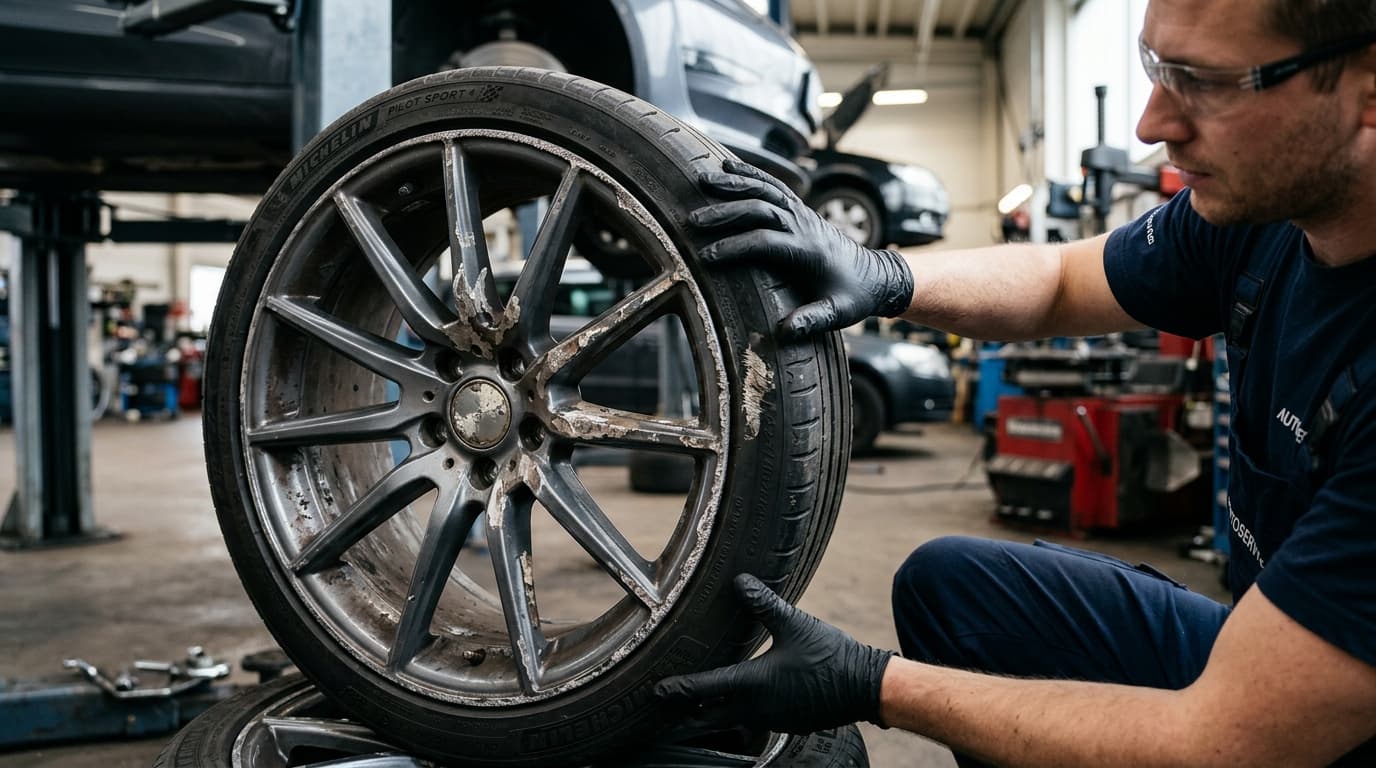
South African roads are notorious for their potholes, speed humps, and jagged kerbs — especially in Cape Town's Northern Suburbs, where roads like Voortrekker Road and the N1 can punish even the most careful driver. Your alloy wheels absorb the impact of every road hazard you encounter, and over time, that punishment adds up.
The problem is that most drivers don't notice the signs wheels need repair until the damage is severe — or worse, until a tyre blows at speed on the N2. Catching wheel damage early is the difference between a straightforward refurbishment and a costly replacement. In this guide, we'll walk you through the top five signs that your alloy wheels need professional attention, and why bringing your car to a specialist like Speedline Mags in Parow is the smart move.
1. Visible Cracks, Chips, or Fractures in the Wheel
This is the most obvious sign, yet it's surprisingly easy to miss if you're not looking closely. Alloy wheels can crack or fracture when struck by a pothole, a raised kerb, or a speed bump taken at the wrong angle. Even hairline cracks — which may be nearly invisible to the untrained eye — can compromise the structural integrity of your wheel.
Why Cracks Are Serious
A cracked alloy wheel is not just a cosmetic issue. The wheel's job is to bear the full load of your vehicle while absorbing road impacts. A fracture weakens the wheel's ability to do this, creating a risk of sudden failure — especially at high speed or during hard cornering.
Cracks are also a common cause of slow tyre leaks. If you're regularly topping up air in one tyre despite no visible puncture, a crack in the rim may be the culprit. The air slowly escapes through the fracture, and conventional tyre repairs won't fix it.
What to Do
Run your fingers along the inside and outside of your wheel lip and spokes. Feel for rough edges, chips, or anything that feels like a break in the metal. If you spot anything suspicious, bring the car in immediately for a professional inspection. At Speedline Mags, we assess whether the crack can be safely welded and restored, or whether the wheel needs to be replaced. Do not continue driving on a cracked wheel — it's not worth the risk.
2. Vibration at Speed That Wasn't There Before
If your steering wheel starts vibrating or shaking, particularly at speeds above 80–100 km/h, something is wrong. Many drivers assume this is a tyre balancing issue, and sometimes it is — but persistent vibration that doesn't resolve after a balance and rotation often points to a buckled or bent wheel.
The Buckle Problem on Cape Town Roads
Buckled rims are extremely common on Cape Town roads. A single sharp pothole hit — especially at speed — can deform the wheel's rim enough to cause it to wobble. This wobble translates directly into the vibration you feel through the steering wheel and the floorpan of the car.
The problem is that a buckled wheel doesn't spin in a true circle. Instead, it creates an oscillating motion that puts uneven stress on your tyre, your wheel bearing, and your suspension components. Left unchecked, a buckled rim will cause premature tyre wear and can damage expensive suspension parts.
Diagnosing Buckles at Home
Lift each wheel off the ground (safely using a jack stand), then spin it slowly by hand and watch the rim carefully. If the outer edge of the rim appears to wobble or move vertically as it spins, the wheel is buckled. A more reliable test is to bring it to a professional — at Speedline Mags, we use wheel straightening equipment to measure runout accurately and restore the rim to true.
You can read more about this process in our guide to wheel straightening and bent rim repair.
3. Uneven or Accelerated Tyre Wear
Your tyres should wear evenly across the tread from one side to the other. If you notice that one side of the tread is wearing significantly faster than the other — or if the tread is developing a scalloped, cupping pattern — this is a red flag that something in your wheel and suspension system is off.
How Wheel Damage Causes Uneven Tyre Wear
A buckled or bent wheel changes the angle at which your tyre contacts the road. Even a small deviation from true can cause the tyre to scrub in one direction more than the other, accelerating wear on one edge. Similarly, a cracked wheel that is slightly out of round will cause the tyre to bounce rather than roll smoothly, creating a cupping pattern.
Alloy wheel damage can also affect your wheel alignment. If a wheel takes a hard knock from a pothole or kerb strike, the impact can push the wheel out of its alignment settings, leading to the car pulling to one side and the tyre wearing unevenly.
The South African Road Context
Cape Town's coastal salt air is also worth mentioning here. Salt accelerates corrosion on alloy wheels, and corroded rims can cause the tyre to not seat perfectly on the bead. This leads to slow leaks and uneven wear over time — particularly problematic for residents in areas like Blouberg, Milnerton, and Table View who are regularly exposed to sea air.
If you're seeing unusual tyre wear patterns, the smart move is to get the wheels inspected before buying new tyres. There's no point in fitting fresh rubber on damaged rims.
4. Peeling Lacquer, Corrosion, or Flaking Finish
Alloy wheels are coated with a clear lacquer to protect the metal underneath from oxidisation. Over time — especially with exposure to Cape Town's coastal salt air, brake dust, and the acidic chemicals in some car wash products — this lacquer can start to peel, bubble, or flake away.
Why Lacquer Damage Is More Than Just Cosmetic
Once the lacquer is compromised, the bare aluminium beneath is exposed to the elements. Aluminium oxidises quickly, forming a white, powdery layer of corrosion (aluminium oxide) that not only looks terrible but also affects the structural surface of the wheel. In severe cases, corrosion can eat into the metal and create pitting that affects how well the tyre seats on the rim, leading to air loss.
Peeling lacquer is also a sign that previous cosmetic repairs may have been done poorly. Cheap or amateur respray jobs often use incorrect primers or insufficient heat curing, causing the finish to fail prematurely. If the lacquer on your wheels is lifting after a recent refurbishment, the work may not have been done to professional standards.
Catching It Early Pays Off
The earlier you address lacquer and corrosion damage, the less metal needs to be stripped and refinished. A full strip-back, chemical clean, primer coat, colour match, and lacquer application at a proper workshop like Speedline Mags in Parow will restore the wheel completely — and when done correctly, the finish should last for years. Our alloy wheel refurbishment guide covers what the process looks like in detail.
5. Scrapes and Kerbing Damage on the Wheel Lip
Kerb rash — the scrapes and gouges left on the outer edge of your alloy wheel when you brush against a pavement or kerb — is by far the most common form of wheel damage in Cape Town. Parallel parking in tight spots in Parow, Bellville, and the CBD results in hundreds of kerbed wheels every day.
More Than Skin Deep
What looks like a surface-level scratch is often more significant than it appears. The outer lip of an alloy wheel is one of the thinner and more vulnerable sections of the rim. Heavy kerb strikes can remove significant amounts of metal, leave jagged edges, and sometimes even crack the lip entirely.
Jagged metal on the wheel lip creates a hazard for your tyre's sidewall. As the tyre flexes during driving, the sidewall can rub against these sharp edges, wearing through the rubber and eventually causing a blowout. It can also damage the tyre bead, leading to persistent air loss.
Even lighter kerbing damage, if left untreated, is an entry point for moisture and corrosion. Over time, rust can form beneath the surface (if the wheel has any steel components) or aluminium oxidisation can spread from the exposed metal.
The Fix: Kerb Damage Repair
Kerb damage repair involves grinding back the damaged area, filling any deep gouges, shaping the lip back to its original profile, and then refinishing the wheel to match the original colour and sheen. When done professionally, a kerbed wheel can look factory-new again. Our article on how to fix curb rash on alloy wheels walks through the process in detail.
Bonus: The Role of South African Road Conditions
It's worth pointing out that South African drivers face conditions that are harder on alloy wheels than those in many other parts of the world. Between the potholes that open up after Cape Town's winter rains, the speed humps in residential areas, and the rough gravel patches on suburban roads, your wheels are constantly under stress.
Coastal salt exposure (particularly relevant for drivers in Strand, Somerset West, and the Atlantic Seaboard) accelerates corrosion. The combination of intense summer heat and UV radiation can also break down lacquer finishes faster than in temperate climates.
This means that regular wheel inspections — ideally every six months or when you rotate your tyres — are particularly important for South African drivers. The earlier you catch a problem, the simpler and less expensive the repair.
When in Doubt, Get an Inspection
None of the signs above should be ignored. If you're unsure whether your wheels need attention, the safest approach is to bring your car to a professional for an assessment. At Speedline Mags in Parow, we offer free wheel inspections and will give you an honest assessment of what needs to be done — and what can wait.
We work on all makes and models, from VW Polo and Toyota Hilux to BMW 3 Series and Mercedes-Benz GLC. Our team has the tools and experience to assess cracks, buckles, corrosion, and kerbing damage accurately and recommend the right course of action — whether that's a straightforward polish and lacquer, a full powder coat, diamond cut refurbishment, or structural repair.
You can also learn more about pricing in our wheel repair cost guide for South Africa, which covers what you can expect to pay for various types of alloy wheel repairs in Cape Town.
Ready to Book Your Wheel Inspection?
Don't wait until a small problem becomes an expensive one. If you've noticed any of the signs above — cracks, vibration, uneven tyre wear, peeling lacquer, or kerbing damage — get in touch with the team at Speedline Mags today.
We're based in Parow, Cape Town, and serve customers across the Northern Suburbs including Bellville, Durbanville, Goodwood, and beyond. Contact us to book your inspection and get your wheels back in top condition before the damage spreads.
Speedline Mags — Cape Town's alloy wheel repair and refurbishment specialists.