
VW Polo and Golf Wheel Repair: What to Expect
Why VW Polo and Golf Wheels Need Special Attention
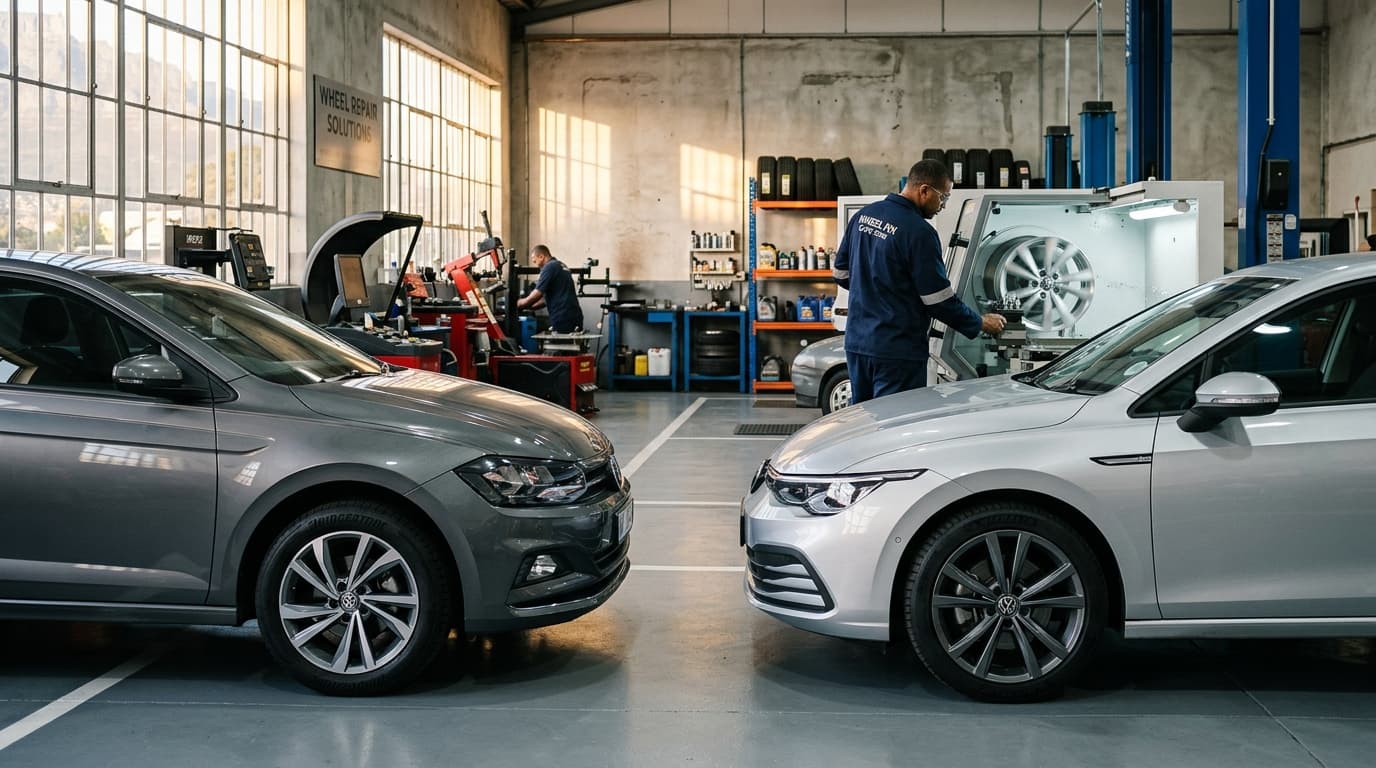
If you drive a Volkswagen in South Africa, you're in good company. The VW Polo and Golf are two of the most popular cars on our roads, and for good reason — they're reliable, stylish, and genuinely enjoyable to drive. But there's a flip side to their popularity: VW Polo and Golf wheel repair is one of the most common services we handle at Speedline Mags in Parow, Cape Town.
Whether it's a scuffed rim from a tight parking spot at Canal Walk or a buckled wheel from hitting a pothole on Voortrekker Road, Polo and Golf owners face the same wheel hazards as everyone else — often with the added complexity of factory diamond-cut or multi-spoke alloy designs that require specialist attention.
In this guide, we'll walk you through everything you need to know about repairing wheels on these two iconic VW models: the types of damage we see most often, what the repair process involves, how much it typically costs, and when replacement makes more sense than repair.
Common Wheel Damage on VW Polo and Golf Models
Curb Rash and Kerb Scuffs
This is far and away the most frequent type of damage we see on Polo and Golf wheels. The alloy rims fitted to models like the Polo Trendline, Polo GTI, Golf 8 R-Line, and Golf GTI tend to sit close to the tyre edge, making them vulnerable to contact with kerbs during parallel parking or navigating tight turns.
Curb rash typically presents as scratches, scrapes, or gouges along the outer lip of the wheel. On standard painted alloys, this is relatively straightforward to repair. On diamond-cut wheels — which are increasingly common on higher-spec Polos and Golfs — the repair process is more involved, as the wheel needs to be machined on a CNC lathe to restore the factory finish.
If you've picked up kerb damage, take a look at our detailed guide on how to fix curb rash on alloy wheels for more background.
Buckled and Bent Rims
Cape Town's roads can be unforgiving. Between seasonal potholes, construction debris, and the occasional speed bump approached a little too enthusiastically, bent rims are a regular occurrence on both the Polo and Golf.
You'll usually notice a buckled rim through vibration at speed, uneven tyre wear, or a persistent slow leak. The lighter alloy wheels fitted to the Polo are particularly susceptible because they're designed to keep weight down, which can mean less material absorbing impact forces.
We use hydraulic straightening equipment to correct bent rims, and in most cases a buckled Polo or Golf wheel can be brought back to true without compromising structural integrity. For more detail on the process, our guide to wheel straightening and bent rim repair covers the full process.
Cracked Alloy Wheels
Cracks are less common than scuffs or bends but far more serious. A cracked alloy wheel is a safety concern — it can lead to sudden air loss at speed. We see cracks most often on Golf GTI and Golf R wheels after significant pothole impacts, particularly on lower-profile tyres like the 225/40 R18 rubbers fitted to performance models.
Whether a cracked wheel can be repaired depends on where the crack is and how severe it is. Cracks on the face or barrel of the wheel may be weldable, but cracks near the spoke junction or through the bead seat generally mean the wheel needs to be replaced. Our article on wheel repair vs replacement can help you understand the decision factors.
Corrosion and Flaking
Older VW Polo Vivo wheels and pre-facelift Golf 7 alloys are especially prone to corrosion, particularly if the factory clear coat has been compromised by stone chips or chemical exposure from harsh wheel cleaners. Corrosion shows up as bubbling, flaking, or white oxidation patches on the wheel surface.
Repairing corroded wheels involves stripping the affected area back to bare alloy, treating the corrosion, and then refinishing with primer, colour coat, and clear lacquer. If you want to understand more about why this happens and how to prevent it, read our piece on wheel corrosion causes and prevention.
VW Polo Wheel Repair: Model-Specific Details
Polo Vivo (2010–2024)
The Polo Vivo has been South Africa's best-selling passenger car for years. Most Vivos run on 14-inch or 15-inch steel wheels with hub caps, though the Highline and GT trims came with alloy wheels. Steel wheel repair is straightforward and affordable — mainly involving straightening and repainting. Alloy Vivo wheels are relatively simple designs that respond well to standard refurbishment.
Polo TSI and Comfortline (2018–present)
The current-generation Polo ships with 15-inch or 16-inch alloy wheels depending on trim. These are typically painted silver or grey alloys with a multi-spoke design. Repair is standard: sand, fill, prime, paint, and clear coat. Turnaround is usually same-day or next-day for cosmetic damage.
Polo GTI
The Polo GTI runs on 17-inch or 18-inch alloys — often with a diamond-cut finish that gives that distinctive two-tone look. Repairing diamond-cut wheels requires CNC lathe machining to recreate the precision finish, followed by a fresh lacquer coat. This is a specialist process and costs more than standard painted wheel repair, but the result is virtually indistinguishable from a new wheel.
For a deeper dive into diamond-cut repair, see our diamond cut wheel repair guide.
VW Golf Wheel Repair: Model-Specific Details
Golf 7 and 7.5 (2013–2020)
The Golf 7 generation is still extremely popular in South Africa. Base models typically have 16-inch alloys, while the GTI and R models run 18-inch or 19-inch wheels. The "Austin" wheel on the Golf 7 GTI is one of the most iconic VW designs — and one we repair frequently. Its intricate spoke pattern collects brake dust and is prone to kerb contact.
Golf 8 (2021–present)
Golf 8 wheels are generally 16-inch to 18-inch alloys with more contemporary designs. The R-Line and GTI specs often feature diamond-cut finishes. One thing to note with Golf 8 wheels is that many of them are hub-centric with very specific offset requirements, so it's important that any repair maintains the original specifications.
Golf GTI and Golf R Performance Wheels
Performance Golfs deserve special mention. The GTI's "Richmond" and "Adelaide" wheels and the Golf R's "Estoril" and "Pretoria" designs are some of the most distinctive alloys on the market. These wheels often run low-profile tyres (35 or 40 series), leaving the rim far more exposed to pothole and kerb damage.
Repairing these wheels requires careful attention to the factory finish — whether that's gloss black, diamond cut, or satin grey. At Speedline Mags, we colour-match to the original VW specification so the repaired wheel blends seamlessly with the rest of the set.
The Repair Process at Speedline Mags
Here's what to expect when you bring your VW Polo or Golf wheels to us in Parow:
Assessment
We begin with a thorough inspection. Every wheel is checked for structural integrity — not just the visible cosmetic damage. We'll identify any cracks, bends, or run-out issues using our precision measuring equipment. You'll get an honest assessment of whether repair is viable or whether replacement is the better option.
Tyre Removal and Preparation
The tyre is removed from the rim so we can work on the full wheel surface. The wheel is then cleaned and stripped of any damaged paint, filler, or clear coat. For diamond-cut wheels, this means mounting the wheel on the CNC lathe.
Repair and Refinishing
For cosmetic damage like curb rash, we fill any gouges, sand the surface smooth, and apply primer. The wheel is then painted in the correct colour — whether that's VW's "Adamantium Dark" metallic or standard silver — and finished with a durable clear coat.
For structural damage like bends, we use hydraulic equipment to straighten the rim before any cosmetic work begins.
Diamond-cut repairs involve precision machining on the lathe to remove a thin layer of alloy, revealing fresh metal underneath. The machined face is then sealed with a high-quality lacquer to protect against corrosion.
Quality Check and Balancing
Every repaired wheel goes through a final quality check. We verify the finish is consistent, the wheel is true, and there are no defects. The tyre is remounted, and the wheel is balanced before it goes back on your car.
How Much Does VW Wheel Repair Cost?
Pricing varies depending on the type of damage and the wheel specification. Here's a general guide for Polo and Golf wheel repair at Speedline Mags:
Standard painted alloy repair (curb rash, scuffs): R650 – R1,200 per wheel
Diamond-cut wheel repair (CNC lathe refurbishment): R1,500 – R2,500 per wheel
Buckled rim straightening: R450 – R900 per wheel
Full wheel refurbishment (strip, repair, repaint): R1,200 – R2,000 per wheel
Colour change or custom finish: R1,500 – R2,500 per wheel
These are indicative prices — the actual cost depends on the severity of damage and the specific wheel design. We always provide a quote before starting any work. For a broader look at pricing across different vehicles and repair types, check our wheel repair cost guide for South Africa.
When Should You Replace Instead of Repair?
Repair isn't always the answer. We'll recommend replacement when there's severe cracking (especially near the hub or spoke roots), when the wheel has been previously repaired multiple times and the alloy is thinning, or when the damage is so extensive that repair would cost more than a quality replacement wheel.
For VW Polo and Golf owners, replacement OEM wheels are available through VW dealers, though they can be pricey. Aftermarket alternatives are also an option — just ensure the offset, PCD (5x100 for most Polos, 5x112 for Golfs), and centre bore match your vehicle's specifications. Our guide on understanding wheel sizes and fitment explains these technical details.
Protecting Your VW Wheels After Repair
Once your wheels are looking fresh again, you'll want to keep them that way. A few practical tips for Polo and Golf owners in Cape Town:
Avoid harsh chemical wheel cleaners — they strip clear coat and accelerate corrosion. Use a pH-neutral wheel cleaner and a soft brush instead. Our guide on wheel care and maintenance has detailed cleaning recommendations.
Stay alert for potholes, especially during the winter months when Cape Town's rainfall tends to create new road hazards. If you can't avoid a pothole, reduce speed before impact rather than braking hard over it. More tips on this in our pothole damage prevention guide.
Consider paint protection or ceramic coating for your wheels after refurbishment. A quality ceramic coat adds a layer of defence against brake dust, road grime, and minor scuffs.
And if you're in the Northern Suburbs — whether that's Bellville, Durbanville, or Table View — our workshop in Parow is centrally located and easy to reach.
Get Your VW Wheels Sorted at Speedline Mags
VW Polo and Golf wheel repair doesn't have to be complicated or expensive. Whether you've picked up a kerb scuff on your Polo Comfortline or need a full diamond-cut restoration on your Golf GTI, Speedline Mags has the equipment, experience, and expertise to get your wheels back to their best.
We work on VW wheels every single day — it's genuinely one of our most common jobs. We know the factory finishes, the correct colours, and the specifications inside out.
Get in touch with us today for a free assessment and quote. You can visit us at our workshop in Parow, Cape Town, or reach out via our contact page to arrange a booking. We'll have your Polo or Golf rolling on wheels that look factory-fresh.