
Wheel Refurbishment Near Me: Complete Guide for South African Drivers
If you've ever typed "wheel refurbishment near me" into Google, you already know the frustration. You want your wheels looking sharp again, but you're not sure who to trust, what the process involves, or whether the shop around the corner will do a proper job. For drivers across Cape Town and South Africa, finding a reliable wheel refurbishment specialist is about more than convenience — it's about protecting a significant investment and keeping your vehicle safe on the road.
This guide breaks down everything you need to know about wheel refurbishment: what the process actually involves, how to evaluate a shop near you, what it should cost, and how to make sure you get results that last.
What Is Wheel Refurbishment?
Wheel refurbishment is the process of restoring a damaged or worn alloy wheel to a condition that's as close to factory-new as possible. It goes beyond a simple touch-up. Depending on the level of damage, refurbishment can include stripping the old finish, repairing structural issues like cracks or bends, reshaping the wheel, and applying a completely new finish — whether that's powder coating, diamond cutting, or a custom colour.
The goal is twofold: restore the wheel's appearance and ensure its structural integrity. A properly refurbished wheel should look great and perform exactly as it did when it left the factory. A poorly done job, on the other hand, can mask underlying problems and create safety risks down the line.
Common Reasons Drivers Seek Refurbishment
Most wheel damage in South Africa falls into a few predictable categories. Kerb rash is by far the most common — those scrapes and scuffs from misjudging a parking spot or clipping a pavement. If you drive in Cape Town or Johannesburg, pothole damage is another major culprit, causing anything from cosmetic scratches to serious buckles and cracks.
Corrosion is also widespread, especially in coastal areas like Cape Town where salt air accelerates the breakdown of protective coatings. Over time, even well-maintained wheels develop a dull, pitted appearance as the clear coat fails and oxidation sets in. And then there's simple wear and tear — brake dust buildup, stone chips, and the accumulated damage of thousands of kilometres on South African roads.
How to Find Quality Wheel Refurbishment Near You
Searching for "wheel refurbishment near me" will return dozens of results, but not all wheel repair shops are created equal. Here's how to separate the professionals from the amateurs.
Check Their Process and Equipment
A reputable wheel refurbishment shop should be transparent about their process. At a minimum, they should be able to explain their stripping method (chemical or media blasting), how they inspect for structural damage, what coating systems they use, and how they cure or bake finishes.
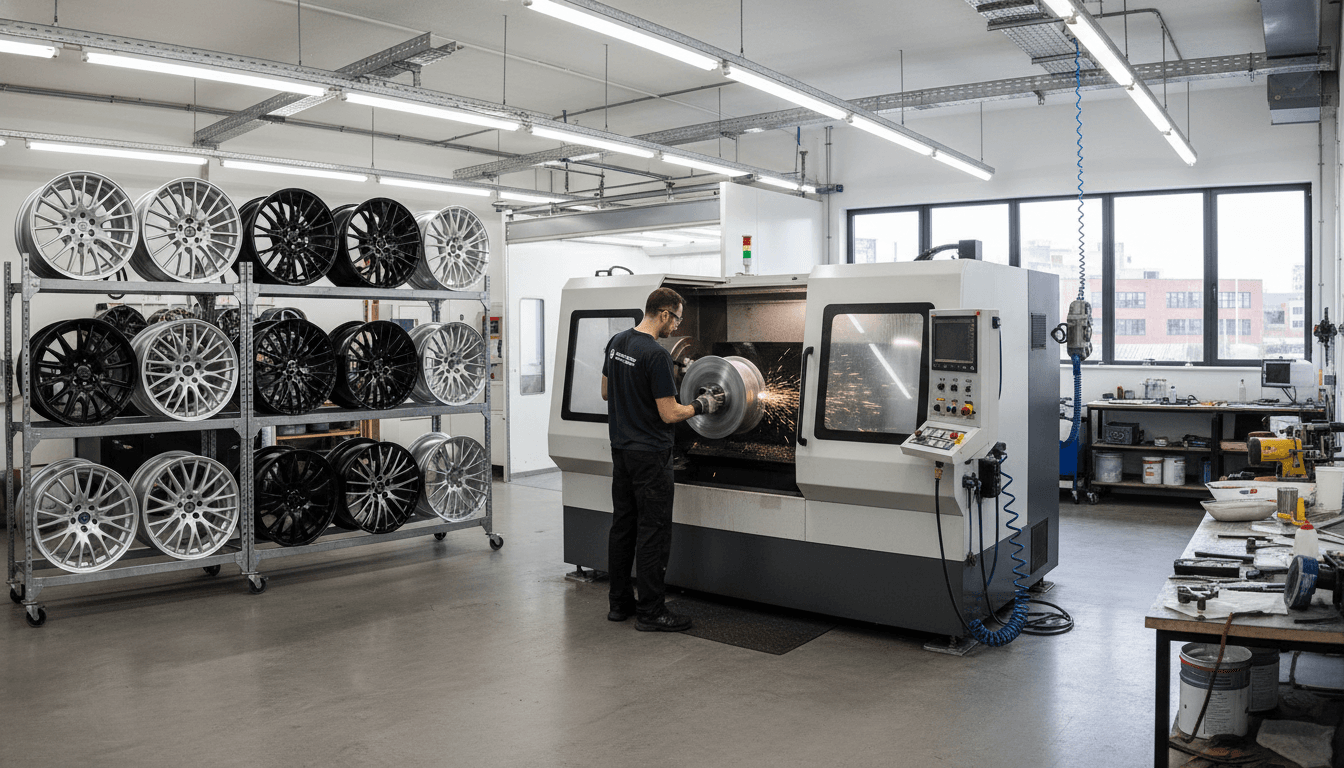
Shops that invest in proper equipment — CNC lathes for diamond cutting, industrial powder coating ovens, wheel straightening machines — generally deliver better results than those relying on hand tools and spray cans. Ask to see the workshop if you can. A clean, well-organised facility with dedicated equipment is a strong indicator of quality.
Look at Before-and-After Examples
Any shop worth visiting should have a portfolio of completed work. Look for before-and-after photos on their website, social media, or in the workshop itself. Pay attention to the quality of the finish — is it smooth and consistent? Are the edges clean? Does the final product genuinely look factory-fresh, or can you spot imperfections?
Read Reviews, but Read Them Carefully
Google reviews and social media feedback are useful, but look beyond the star rating. Pay attention to reviews that mention specific details: turnaround time, communication, whether the finish held up over time. A shop with hundreds of positive reviews mentioning consistent quality is more trustworthy than one with a handful of vague five-star ratings.
Ask About Warranties
Professional wheel refurbishment shops stand behind their work. A warranty of 12 months or more on the finish is standard among reputable operators. If a shop won't guarantee their work, that's a red flag. Ask specifically what the warranty covers — does it include peeling, flaking, or colour fade?
The Wheel Refurbishment Process Explained
Understanding what happens to your wheel during refurbishment helps you evaluate the quality of the work and set realistic expectations.
Step 1: Inspection and Assessment
Every refurbishment starts with a thorough inspection. The technician examines each wheel for structural damage — cracks, bends, or deformations that could compromise safety. Minor cosmetic damage like kerb rash and scratches is noted, along with the current finish type and condition.
This is a critical step. A good shop will tell you honestly if a wheel is beyond economical repair or if it has structural issues that make refurbishment inadvisable. If you want to understand when repair makes sense versus replacement, that's worth reading up on separately.
Step 2: Stripping the Old Finish
Before any new finish can be applied, the old coating must come off completely. Professional shops use chemical stripping, media blasting (with materials like glass bead or aluminium oxide), or a combination of both. This reveals the bare alloy surface and exposes any hidden damage that wasn't visible under the old finish.
Step 3: Repair Work
With the wheel stripped bare, any structural repairs are carried out. This might include straightening a buckled rim, welding hairline cracks, or filling minor surface imperfections. The wheel is then machined or sanded to create a smooth, even surface ready for finishing.
Step 4: Applying the New Finish
This is where the transformation happens. The most common finish options include:
Powder Coating — The most durable option for everyday driving. A dry powder is electrostatically applied and then baked in an oven at around 200°C, creating an incredibly tough, even finish. Available in virtually any colour. Read more in our powder coating guide.
Diamond Cutting — A CNC lathe precisely removes a thin layer of alloy from the wheel face, creating the distinctive bright, machined finish you see on many modern OEM wheels. The wheel is then lacquered to protect the exposed alloy from corrosion.
Painted Finish — A more affordable option using automotive-grade paint. Not as durable as powder coating but suitable for certain applications and budgets.
Hyper Silver / Shadow Chrome — Specialty finishes that replicate the look of chrome without the weight or maintenance concerns.
Step 5: Quality Control and Balancing
After finishing, each wheel should go through quality checks: visual inspection for imperfections, measurement to confirm the finish hasn't affected critical dimensions, and balancing to ensure smooth rotation. A shop that skips this step is cutting corners.
Wheel Refurbishment Cost in Cape Town
One of the first questions most drivers have when searching for wheel refurbishment near them is how much it will cost. In Cape Town, you can expect the following approximate price ranges per wheel:
Standard powder coating in a single colour typically runs between R600 and R1,200 per wheel. Diamond cut refurbishment is more expensive due to the precision equipment required, usually falling between R1,000 and R2,000 per wheel. Custom finishes, two-tone work, or specialty colours can push costs higher. For a full set of four wheels, most drivers should budget between R3,000 and R8,000 depending on the finish type, wheel size, and extent of damage.
These prices vary based on several factors: the size of the wheel (larger wheels cost more), the severity of the damage, the type of finish requested, and the turnaround time. Rush jobs typically carry a premium. For a more detailed breakdown, check our wheel repair cost guide.
It's worth noting that refurbishment is almost always significantly cheaper than buying new wheels. A single OEM alloy wheel for a popular model like the VW Golf or BMW 3 Series can cost R5,000 to R15,000 from a dealer. Refurbishing all four wheels for less than the price of one new wheel is a compelling proposition.
Wheel Refurbishment Near Me in Cape Town: Areas We Serve
If you're in the Cape Town area, Speedline Mags is based in Parow, right in the heart of the Northern Suburbs. This central location means we're easily accessible from across the metro.
Northern Suburbs
Drivers from Bellville, Goodwood, Durbanville, Brackenfell, and Kraaifontein are just a short drive away. Parow is well connected via the N1 and Voortrekker Road, making drop-off and collection straightforward.
Atlantic Seaboard and City Bowl
From the CBD, Green Point, Sea Point, or Camps Bay, you can reach us in about 20 minutes via the N1. Coastal drivers often need refurbishment more frequently due to the salt air environment accelerating wheel corrosion.
West Coast and Blouberg
Residents of Table View, Blouberg, Milnerton, and Parklands can reach our Parow workshop easily via the R27 or Marine Drive.
Southern Suburbs and Helderberg
Drivers from Claremont, Constantia, Somerset West, and Strand are welcome too. While the drive is a bit further, many customers from these areas find the trip worthwhile for the quality of work.
How to Prepare Your Wheels for Refurbishment
A little preparation on your part can help the process go smoothly.
Clean your wheels beforehand — While the shop will strip and clean them professionally, removing heavy brake dust and grime makes the initial inspection more accurate. Our guide on how to clean alloy wheels safely covers the basics.
Note any specific concerns — If you've noticed vibration at speed, a slow leak, or a particular area of damage, mention it during drop-off. This helps the technician prioritise their inspection.
Decide on your finish in advance — Browse the shop's portfolio and have a clear idea of the colour and finish type you want. If you're unsure, ask for advice — a good shop will help you choose a finish that suits your vehicle and driving habits.
Arrange alternative transport — Depending on the finish type and the shop's workload, refurbishment typically takes between two and five working days. You'll need to plan accordingly. Some shops, including those offering mobile wheel repair, can work on wheels while they're still on your vehicle for minor cosmetic repairs.
How Long Does Wheel Refurbishment Take?
Turnaround time depends on the finish type and the extent of work required. Standard powder coating typically takes two to three working days. Diamond cut refurbishment may take three to five days due to the additional machining step. If structural repairs like straightening or welding are needed, add another day or two.
Most shops operate on a first-come, first-served basis, so availability can vary. During busy periods — particularly around the holiday season when drivers want their cars looking good for road trips — lead times can stretch. Booking in advance is always a good idea.
Signs You Need Wheel Refurbishment
Not sure if your wheels actually need professional attention? Here are the telltale signs:
Visible kerb rash or deep scratches that have broken through the clear coat or paint layer expose the bare alloy underneath. Left untreated, these become entry points for corrosion.
Peeling or flaking clear coat is a common issue on wheels over three to four years old, especially diamond cut wheels exposed to harsh conditions. Once the clear coat fails, corrosion follows quickly.
Discolouration or white powdery spots indicate active corrosion. This won't improve on its own and will spread if not addressed.
Vibration or wobble at highway speeds can indicate a buckled rim that needs straightening as part of the refurbishment process.
A generally tired, dull appearance across all four wheels often justifies a full set refurbishment. The visual impact of freshly refurbished wheels is dramatic — it's one of the most cost-effective ways to transform your vehicle's appearance.
Choosing Between Wheel Refurbishment and Replacement
In most cases, refurbishment is the smarter choice. It's significantly cheaper, environmentally better (keeping usable alloy out of landfill), and when done properly, produces results indistinguishable from new wheels. The finish options available through refurbishment actually exceed what's available from the factory, giving you the opportunity to customise your wheels in ways that weren't possible when you bought the car.
Replacement makes more sense when the wheel has severe structural damage — deep cracks through the barrel, major deformation that can't be straightened safely, or extensive corrosion that has compromised the alloy's integrity. A trustworthy refurbishment shop will be upfront about when a wheel has reached the end of its usable life.
For a deeper analysis of the repair versus replace question, see our dedicated decision guide.
Why Speedline Mags for Your Wheel Refurbishment
At Speedline Mags in Parow, we've built our reputation on delivering factory-quality wheel refurbishment with honest advice and fair pricing. Our workshop is equipped with CNC diamond cutting lathes, industrial powder coating ovens, and hydraulic straightening equipment — the tools needed to handle everything from a simple kerb rash repair to a complete multi-finish restoration.
We work on all makes and models — from VW Polos and Golfs to BMW 3 Series and X5s, Toyota Hiluxes, Mercedes-Benz, Ford Rangers, and everything in between. Every refurbishment comes with our quality guarantee, and we're always happy to show you around the workshop so you can see exactly how your wheels will be treated.
If you're searching for wheel refurbishment near you in Cape Town, get in touch with Speedline Mags for a free assessment and quote. Call us, WhatsApp us, or drop into our Parow workshop — we'll take a look at your wheels and give you an honest recommendation on the best path forward.