
Wheel Vibration at High Speed: Causes and Fixes
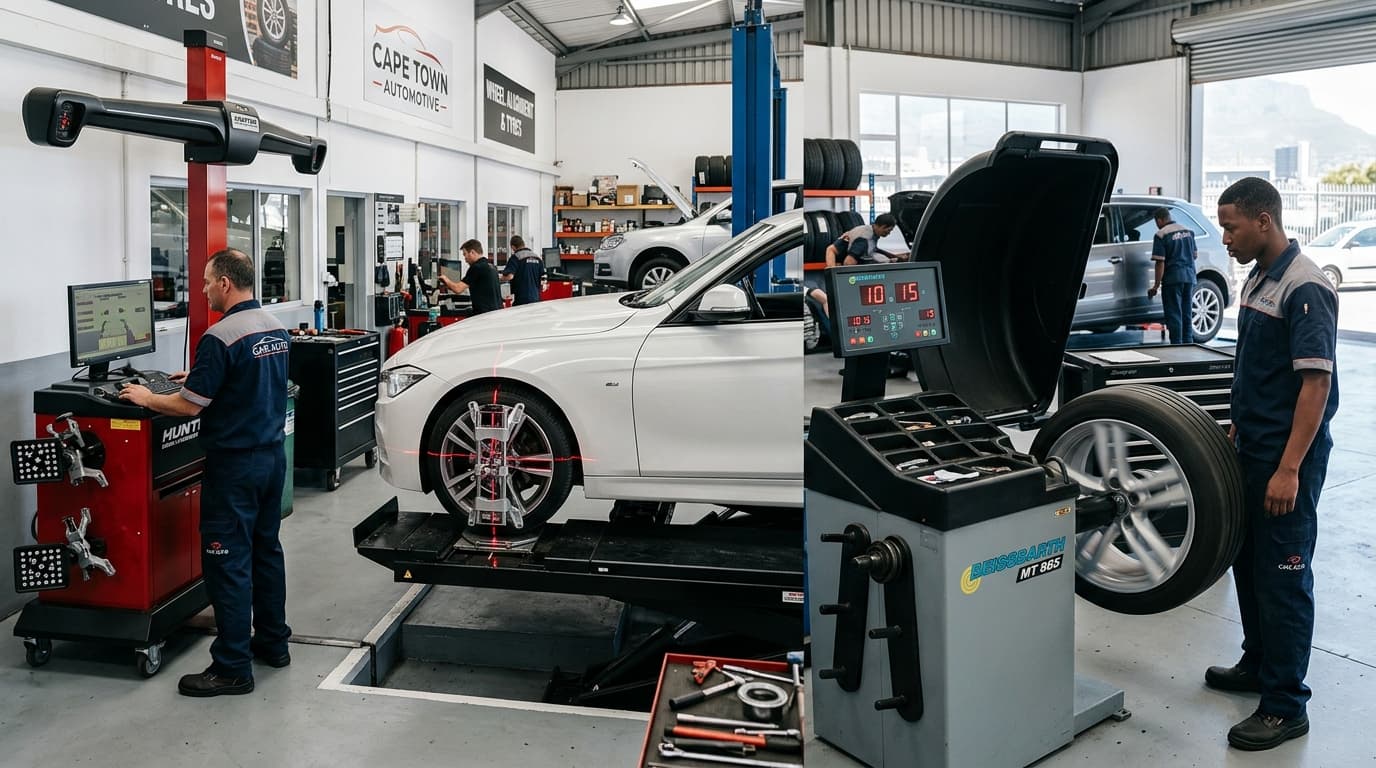
That juddering through the steering wheel as you reach 110km/h on the N1 — most Cape Town drivers have felt it at some point. Wheel vibration at high speed is one of the most common complaints we hear at Speedline Mags, and the good news is that it almost always has a fixable cause. The bad news: ignoring it leads to uneven tyre wear, damaged wheel bearings, and in serious cases, a genuine safety risk.
This guide walks through every major cause of high-speed wheel vibration, how to identify each one, and what the correct fix looks like.
Why Wheel Vibration Gets Worse at Speed
Low-speed vibration is sometimes barely noticeable. The reason it intensifies at higher speeds is physics — even a small imbalance or minor structural irregularity generates increasing centrifugal force as rpm rises. At 60km/h you might feel a faint shimmy; at 120km/h that same issue can feel like the car is shaking itself apart.
This is why road-speed vibration (typically felt between 80km/h and 130km/h) is a reliable diagnostic signal. Where you feel the vibration — in the steering wheel, the seat, or throughout the cabin — also tells you a lot about which wheel or axle is affected.
The Most Common Causes of Wheel Vibration at High Speed
1. Wheel Imbalance
This is by far the most common cause. Every wheel and tyre assembly has minor weight variations — from the valve stem, from tyre construction, from any asymmetry in the wheel itself. A wheel balancing machine accounts for this by attaching small lead or zinc weights to specific points on the rim.
Over time, balance weights fall off (especially after driving over the rough roads common in Cape Town and the Northern Suburbs). Wheel imbalance typically causes:
- Vibration that starts around 80–100km/h and gets worse as speed increases
- Steering wheel shake if it's a front wheel, seat/floor vibration if it's a rear wheel
- Uneven tyre wear, particularly cupping or scalloping on the tread
The fix: Professional wheel balancing. This is quick, inexpensive, and should be part of your routine tyre rotation. At Speedline Mags we re-balance every wheel we work on as standard practice.
2. Buckled or Bent Rim
Potholes are a fact of life on South African roads. A sharp pothole impact can bend the rim — sometimes visibly, sometimes in a way that's only detectable on a balancing machine or by spinning the wheel by hand.
A buckled rim creates an out-of-round rotation, meaning the wheel doesn't trace a perfect circle as it spins. At low speeds this may feel like a slight thud; at highway speeds it becomes a persistent, rhythmic vibration or bounce.
How to spot it: Have the wheel inspected on a balancing machine. You'll see an oscillation in the dial indicator rather than a static imbalance. Visually, you may notice the tyre has a slight lump or the bead isn't sitting uniformly.
The fix: Wheel straightening. At Speedline Mags we use hydraulic presses and precision rollers to restore the rim to its original geometry. Read more in our guide to wheel straightening and bent rim repair.
3. Damaged or Cracked Wheel
More serious than a simple buckle, a cracked alloy wheel — usually at the barrel or around a spoke — can cause severe vibration and is a safety issue that must be addressed immediately. Cracks typically occur from high-impact pothole strikes or kerbing incidents.
A cracked wheel may still hold air via a bead seal, which can mask the seriousness of the damage. But at speed, the structural flex around the crack creates vibration and, in a worst case, can lead to sudden failure.
The fix: Alloy wheel welding and repair, followed by re-balancing. Depending on the crack location and severity, repair may or may not be viable — our technicians assess each case individually. See our related guide: Cracked Alloy Wheel: Repair or Replace?
4. Worn or Damaged Wheel Bearings
Wheel bearings allow the hub to spin smoothly. When a bearing wears out or becomes damaged — often from the same pothole impacts that cause rim damage — it creates a roughness in the rotation that translates to vibration and a distinctive humming or growling noise.
Bearing-related vibration tends to:
- Be present across a wider speed range than balance-related vibration
- Be accompanied by an audible hum or drone that changes pitch with speed
- Sometimes get worse when you change lanes (loading the bearing laterally)
The fix: Bearing replacement — this is a mechanical repair rather than a wheel repair, though at Speedline Mags we often identify bearing issues during a wheel inspection and can refer you to the right specialist.
5. Tyre Issues
The tyre itself can be the source of vibration even if the wheel is perfectly straight. Common tyre-related causes include:
- Flat spots: Formed when a car sits stationary for an extended period (months) or after emergency braking that locks a wheel. The tyre develops a slightly flattened section that causes thumping at low-to-medium speed. Flat spots often warm out after a few kilometres of driving.
- Tyre separation: Internal belt or ply separation causes a persistent wobble or bulge. This is a safety issue requiring immediate tyre replacement.
- Mismatched tyres: Running different tyre sizes or brands on the same axle can cause vibration due to unequal rolling circumference.
- Uneven wear: If tyres have worn unevenly due to alignment issues or prolonged imbalance, the irregular surface creates vibration.
The fix: Tyre inspection, and replacement where necessary. If the tyre is serviceable, re-balancing after resolving any underlying wheel or alignment issue usually solves the problem.
6. Wheel Alignment Problems
Wheel alignment isn't directly about vibration in the same way as imbalance, but poor alignment causes rapid, uneven tyre wear that then creates vibration. It can also cause the car to pull to one side, which drivers sometimes describe as vibration or instability at speed.
How to spot it: Uneven wear across the tyre width (more wear on inside or outside edge), the car drifting to one side on a flat road.
The fix: Four-wheel alignment at a reputable tyre or alignment centre, followed by tyre rotation or replacement if wear is severe. It's worth noting: if you've had a wheel straightened or replaced, alignment should be rechecked.
7. Loose Wheel Nuts or Wheel Fitment Issues
This is less common but potentially the most dangerous cause. If wheel nuts haven't been torqued correctly — or if the wrong hub-centric rings are fitted with aftermarket wheels — the wheel can develop microscopic movement that becomes dramatic vibration at speed.
After any wheel removal (tyre fitting, brake work, wheel repair), always verify torque spec with a calibrated torque wrench. Many tyre fitment centres use impact guns without a final torque check, which can leave nuts slightly loose.
Diagnosing the Source: Where Do You Feel It?
| Vibration location | Most likely cause | |---|---| | Steering wheel only | Front wheel imbalance or front bent rim | | Seat or floor only | Rear wheel imbalance or rear bent rim | | Whole car, steering included | Multiple wheels affected, or driveline issue | | Rhythmic thumping | Flat-spotted tyre or seriously buckled rim | | Gets worse turning | Wheel bearing or CV joint |
This table is a starting point. A proper diagnosis requires putting the car on a balancing machine and visually inspecting each wheel and tyre.
When to Take It Seriously
Any high-speed vibration should be investigated. But treat the following as urgent:
- Vibration that starts suddenly after hitting a pothole or kerb — you may have a cracked or severely buckled wheel
- Vibration accompanied by a pulling sensation — possible tyre blow-out risk or structural failure
- Vibration that worsens over a short period — a bearing nearing complete failure can do this
- Any visible bulge, crack, or deformation on a wheel or tyre
Don't delay if you notice any of these. Driving on a compromised wheel at highway speed is a risk not worth taking.
How Speedline Mags Diagnoses Wheel Vibration
When a customer brings in a car with high-speed vibration complaints, our process is:
- Visual inspection of all four wheels and tyres — looking for cracks, buckles, irregular wear, missing balance weights
- On-machine balance check — each wheel is spun up to identify static and dynamic imbalance, and any out-of-round condition
- Structural assessment — if a buckle or crack is suspected, we assess repairability
- Repair and re-balance — whether it's straightening, welding, or simply re-balancing, we restore the wheel to spec
- Post-repair test — the wheel is balanced again after any repair to verify the result
Most balance-related vibration jobs can be resolved in a single visit. Straightening or welding repairs typically take a day or two, depending on our workload.
Cost of Fixing Wheel Vibration in Cape Town
The cost depends entirely on the cause:
- Re-balancing (per wheel): R80–R150 at most fitment centres; we include re-balancing in all our repair services
- Wheel straightening: From around R500–R900 per wheel depending on severity
- Alloy welding: From R600–R1200+ depending on crack location and complexity
- Tyre replacement: Market rate depending on brand and size
Compared to the cost of replacing a full alloy wheel (R2,000–R8,000+ depending on the car), repair is almost always the better financial decision. Read our full wheel repair cost guide for South Africa for a detailed breakdown.
Can You Drive with Wheel Vibration?
For minor imbalance vibration — yes, temporarily. But it's not worth putting off. Every kilometre of driving with an imbalanced wheel accelerates tyre wear and stresses wheel bearings. For any vibration caused by a bent, cracked, or loose wheel, the answer is no — have it seen to before your next long trip.
If you're unsure of the cause, bring it in. A quick inspection costs nothing, and the peace of mind is worth it.
Preventing Wheel Vibration
Most wheel vibration issues are preventable:
- Drive around potholes where safely possible — especially at speed, which multiplies the impact force
- Check tyre pressure monthly — under-inflated tyres are more vulnerable to rim damage from impacts
- Rotate and balance tyres every 10,000km as part of standard maintenance
- Inspect wheels after any significant pothole or kerb impact — don't wait for vibration to develop
- Choose a reputable fitment centre that uses torque wrenches, not just impact guns
For a complete maintenance routine, see our ultimate wheel care guide.
Get Your Wheels Inspected at Speedline Mags
Located in Parow, Cape Town, Speedline Mags serves drivers across the Northern Suburbs — Bellville, Durbanville, Goodwood, Brackenfell, and beyond. We specialise exclusively in alloy wheel repair, refurbishment, and balancing, which means every job gets the focused attention it deserves.
If you're experiencing wheel vibration at high speed, don't guess — bring your car in for a free inspection. We'll tell you exactly what's causing it and what it'll take to fix it.
Contact Speedline Mags via our website to book a convenient time, or simply drive in during business hours. Most diagnostic inspections are completed while you wait.